


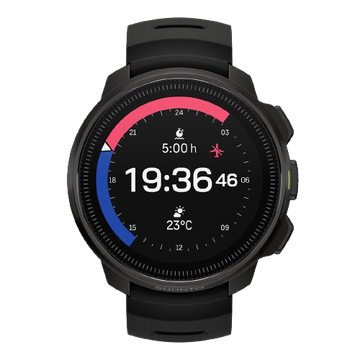


If you are considering a Suunto sports watch, one of the most common questions is the difference between Suunto Race S and Suunto Race 2.
Both models feature an AMOLED display, offline maps, 115+ sport modes, and training analysis tools for running, trail running, racing, and daily training. A simple way to think about the difference is this: Suunto Race S is a smaller, lighter performance watch that is easy to wear every day, while Suunto Race 2 is built for training and racing with a larger screen and longer battery life. Race S has a 45 mm case and weighs 60 g in stainless steel or 53 g in titanium. Race 2 has a 49 mm case and weighs 76 g in stainless steel or 65 g in titanium.
In short, choose Suunto Race S if you value lightness and a compact fit. Choose Suunto Race 2 if you want a larger screen, longer battery life, and clear visibility during training.
This article explains the differences between Suunto Race S and Suunto Race 2 from the perspectives of size, weight, battery life, usability, and training features.
The Main Differences Between Suunto Race S and Race 2
Suunto Race S and Suunto Race 2 are both full-featured sports watches for running, training, and outdoor activities. They share many core features, and both deliver the accurate tracking, offline maps, and training analysis expected from Suunto.
The key differences are size, screen visibility, and battery performance.
Suunto Race S is the more compact model, with a 45 mm case. It sits comfortably on the wrist and weighs 60 g, making it easy to wear for daily runs, training, and everyday use. Its 1.32-inch AMOLED display delivers sharp, clear visuals in a smaller format.
Suunto Race 2 has a 49 mm case and a 1.5-inch LTPO AMOLED display. The larger screen makes it easier to check data and maps during training. It also supports up to 55 hours in high-performance GPS mode and up to 18 days in smartwatch mode.
In other words, Race S is strongest in lightness and compactness, while Race 2 is strongest in screen size and battery life.
Quick Answer: Which One Fits You?
Suunto Race S is best suited for people who prioritize lightness and wearing comfort.
If you have a smaller wrist, prefer a less bulky sports watch, or want a model that feels natural for everyday wear, Race S is a strong choice. It is also well suited for runners who want the watch to feel less noticeable during training, or for those who want one watch for the gym, commuting, daily life, and workouts.
Suunto Race 2 is best suited for people who prioritize screen visibility and battery performance.
If you want to check multiple data fields during training, such as heart rate, pace, distance, route, and altitude, the larger screen is a clear benefit. For trail running, ultra marathons, and long activities, Race 2’s battery performance adds confidence. Race 2 provides up to 55 hours with all-systems GNSS plus multiband, while Race S provides up to 30 hours.
If you are unsure, use this simple guide:
Choose Race S for lightness and daily wearability. Choose Race 2 for a larger screen and longer battery life.
Who Should Choose Suunto Race S?
Suunto Race S is recommended for people looking for a compact and lightweight sports watch.
It is especially well suited for those who want one watch for daily running, gym training, weekend trail runs, and everyday wear. The longer you wear a sports watch, the more you notice differences in size and weight. With its 45 mm case and weight of 60 g in stainless steel or 53 g in titanium, Race S is designed to sit comfortably on the wrist during both training and daily life.
Despite its smaller size, Race S supports 115+ sport modes, heart rate and body metrics tracking, Suunto Coach, an AMOLED display, and free offline maps. Choosing the smaller model does not mean giving up advanced training features.
Race S is also a practical choice for women or anyone looking for a compact sports watch. Its lighter build makes it easier to wear for running, training, everyday use, and sleep tracking.
“I want advanced features, but I do not want a watch that feels too large.”
“I want a model that works naturally for both running and everyday use.”
“I want a lightweight watch with offline maps and training analysis.”
“I want a colorful, refined running watch design.”
If that sounds like you, Suunto Race S is a strong fit.
Who Should Choose Suunto Race 2?

Suunto Race 2 is recommended for people who want stronger usability for training and racing.
Its main advantage is the visibility of the 1.5-inch LTPO AMOLED display. During running or on the trail, the time available to look at the screen is limited. A larger display makes it easier to check data quickly, which supports pace management and route awareness. Race 2 features a bright 1.5-inch AMOLED display, 115+ sport modes, offline maps, and up to 55 hours of GPS battery life.
Battery performance is another major strength of Race 2. It supports up to 55 hours with all-systems GNSS plus multiband and up to 200 hours in power-saving GNSS mode, making it well suited for long races, trail running, and long rides.
Race 2 also features sapphire crystal glass and 100 m water resistance. Race S uses Gorilla Glass and 50 m water resistance, so Race 2 is the better choice if durability and water resistance are higher priorities.
“I want a screen that is easier to read.”
“I want to use the watch for long races or extended training.”
“I want stronger durability and water resistance.”
If that sounds like you, Suunto Race 2 is recommended.
Race S vs Race 2 Comparison Table
Differences by Use Case
| Comparison item | Suunto Race S | Suunto Race 2 |
| Main use | Daily running, training, everyday wear | Races, long trails, advanced training |
| Main priority | Lightness, compact size, wearing comfort | Large screen, visibility, long battery life |
| Best scenes | Daily runs, gym, everyday use | Long races, trails, route checking |
| Best for | People who want a lighter, smaller model | People who value visibility and battery life |
Specification Comparison
| Specification | Suunto Race S | Suunto Race 2 |
| Size | 45 × 45 × 11.4 mm | 49 × 49 × 12.5 mm |
| Weight | Stainless steel: 60 g / Titanium: 53 g | Stainless steel: 76 g / Titanium: 65 g |
| Display | 1.32-inch AMOLED | 1.5-inch LTPO AMOLED |
| Resolution | 466 × 466 | 466 × 466 |
| Glass material |
Gorilla Glass
|
Sapphire crystal |
| Water resistance | 50 m | 100 m |
| Offline map storage | 32 GB | 32 GB |
| Smartwatch mode | Up to 9 days | Up to 18 days |
| All-systems GNSS plus multiband | Up to 30 hours | Up to 55 hours |
| All-systems GNSS plus single band | Up to 40 hours | Up to 65 hours |
| Power-saving GNSS mode | Up to 120 hours | Up to 200 hours |
| Strap width | 22 mm | 22 mm |
The table shows that Race S is strongest in compact size and lightness, while Race 2 has advantages in screen size and battery performance. Both models include 32 GB of offline map storage and use a 22 mm strap width. Race S uses a 1.32-inch AMOLED display, while Race 2 uses a 1.5-inch LTPO AMOLED display.
Choose Race S for Compact Size and Lightness

The appeal of Race S is its everyday lightness and compact fit.
A sports watch used for training needs more than features. It also needs to be easy to wear consistently. A larger watch can make the screen easier to read, but depending on wrist size, it can also feel more noticeable. During running, some users may also feel the weight or thickness of the watch during arm swing.
Race S is a compact model that helps reduce that kind of distraction. It fits smaller wrists more easily and blends naturally with everyday clothing, making it useful not only during training but also for sleep tracking and daily activity tracking.
At the same time, it supports 115+ sport modes, including running, cycling, swimming, and trail running. It also includes race-focused tools such as race pacer and race time prediction.
If you want a light, compact model with the essential performance features you need, Race S is a strong choice.
Choose Race 2 for a Larger Screen, Battery Life, and Visibility
Race 2 is designed for people who value clear visibility and confidence during training.
The large 1.5-inch display is useful when checking pace, heart rate, distance, altitude, route, and other data. In trail running and long races, being able to read detailed information quickly can support better pacing and route decisions.
Race 2 also offers strong battery performance. With up to 18 days in smartwatch mode and up to 55 hours with all-systems GNSS plus multiband, it is built for daily training as well as long races and travel.
Its sapphire crystal glass and 100 m water resistance also add confidence for outdoor use and demanding training. If you are looking for a performance watch built for long-term use, Race 2 is recommended.
Offline Maps and Navigation on Both Models
Suunto Race S and Suunto Race 2 both support offline maps and navigation features. By downloading maps in advance, you can check your current location and route on the watch, even in mountains or trail areas where smartphone reception may be limited.
With the April 2026 map and navigation feature update, both Race S and Race 2 support smart turn-by-turn guidance, climb guidance with zoom control, map labels, track back, and customizable map fields.
In the Suunto app, offline maps, offline route creation, and enhanced elevation data are also available for free. Even without network connection in the field, downloading area data in advance helps with route planning and navigation. For more details, see the related article “New Maps & Navigation Updates Now Rolling Out (April 2026)”.
Suunto Coach on Both Models
Suunto Race S and Suunto Race 2 both work with the Suunto app to support daily training management.
Suunto Coach in the Suunto app helps you understand your daily condition and training status based on training load, exercise intensity, recovery, sleep changes, and more. Suunto Coach is a free feature in the Suunto app and can be used without additional cost when you have a compatible watch and the Suunto app.
AI-powered training plans can be created based on your current fitness level, goals, schedule, and available training time. Created plans can be synced to your Suunto watch, making them easy to include in daily training.
Whether you want to use the lightness of Race S to stay consistent with daily training, or use Race 2 to prepare seriously for races, Suunto Coach provides reliable support.
▶︎ “Level Up Your Training with Suunto Coach – Now Smarter with AI”
What If You Also Hike or Spend Long Hours Outdoors?

Race S and Race 2 are both well suited for running and training. Race 2, in particular, is also a strong option for trail running and long outdoor activities thanks to its battery performance, screen visibility, and water resistance.
However, if your main activities include hiking, trekking, long hikes, or multi-day mountain trips, Suunto Vertical 2 is also worth considering. Vertical 2 is designed for extended outdoor activities and is well suited for users who want added confidence in mountain environments.
If you want to understand the difference between these outdoor-focused models, see the related article “Suunto Vertical 2 vs Race 2”.
Summary: Choose Race S or Race 2 by Size and Use Case
Suunto Race S and Suunto Race 2 are both high-performance sports watches. Both include an AMOLED display, offline maps, 115+ sport modes, Suunto Coach, and training analysis features, making them useful for running, trails, and daily training.
Suunto Race S is recommended for people who prioritize lightness and compact size. It is easy to wear every day, fits smaller wrists comfortably, and supports consistent running and training.
Suunto Race 2 is recommended for people who prioritize a larger screen, longer battery life, visibility, and durability. For long races, trail running, and more advanced training, it is a reliable training partner.
Choose Race S for a lighter feel. Choose Race 2 for more demanding training and racing.
Select the model that fits your style, and make your next training session or race more focused and rewarding.
Frequently Asked Questions
Which is better for running, Suunto Race S or Race 2?
Race S is recommended if you want a light watch for daily running and everyday use. Race 2 is better if you value screen visibility and longer battery life, and want to use the watch for races or long trails.
Which model is better for smaller wrists?
Race S is recommended for smaller wrists. It has a 45 mm case and weighs 60 g in stainless steel or 53 g in titanium, making it a compact model for users who find larger sports watches too bulky.
Which model has longer battery life?
Race 2 has longer battery life. It provides up to 55 hours with all-systems GNSS plus multiband and up to 18 days in smartwatch mode. Race S provides up to 30 hours with all-systems GNSS plus multiband and up to 9 days in smartwatch mode.
Can both models use offline maps?
Yes. Both Race S and Race 2 support offline maps. Both models include 32 GB of offline map storage.
Which model is better for hiking and trail running?
For trail running, choose Race S if you prioritize lightness, or Race 2 if you prioritize screen visibility and long battery life. If hiking, trekking, or multi-day mountain activities are your main focus, Vertical 2 is also worth considering.


