


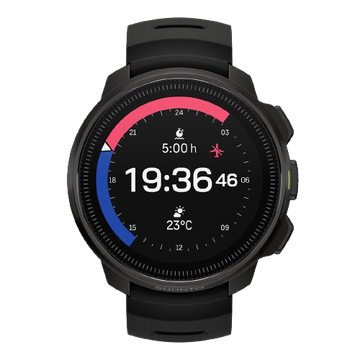


In trail running, where you run, how much elevation you gain, and how long your battery lasts can matter even more than on the road.
On mountain trails, performance and safety depend on more than distance. Elevation gain, trail conditions, weather, route awareness, and battery life all play an important role. For long races or unfamiliar routes, a watch with accurate GPS, offline maps, route navigation, and reliable battery life can help you move with greater confidence.
This article explains why a GPS sports watch is useful for trail running, which features to check when choosing one, and which Suunto models are recommended for different types of trail runners.
Contents
- Why trail runners need a GPS sports watch
- Key features for a trail running GPS watch
- Trail running and Suunto
- Recommended Suunto GPS watches for trail running
- Trail runners who should choose Suunto Race S
- Trail runners who should choose Suunto Race 2
- Trail runners who should choose Suunto Vertical 2
- Race S, Race 2, and Vertical 2 comparison
- Choosing a GPS watch for race day
- Run trails with more confidence and better planning with Suunto GPS watches
Why Trail Runners Need a GPS Sports Watch

Trail running is not just about checking distance and pace like road running. On mountain trails, you often need to make decisions while moving: climbs and descents, trail surface, weather, route junctions, and distance to the next aid point can all affect how you run.
With a GPS sports watch, you can check current location, distance, pace, heart rate, elevation gain, route, and remaining battery directly from your wrist. You do not need to take out your phone, which makes it easier to make decisions during races or in the mountains.
Route awareness and battery management are especially important on unfamiliar courses and long races. A watch with offline maps and route navigation lets you follow a prepared route even in areas where signal is limited.
Trail running also builds fatigue quickly, and heart rate can change significantly on climbs and descents. A GPS sports watch that tracks heart rate, training load, and recovery can support training plans and post-race review.
A GPS watch for trail running is not only a tool for running faster. It is a partner for understanding your route, your body, and your plan in the mountains.
Key Features for a Trail Running GPS Watch

A GPS watch for trail running does more than record distance and pace.
In the mountains, it is important to check information that supports decision-making, including current location, route, elevation, weather, and remaining battery.
GPS Accuracy
In the mountains, trees, valleys, and steep terrain can make GPS signals less stable.
For trail running, GPS accuracy affects not only distance and pace, but also route awareness and activity review after the run. If you want to understand distance and elevation more accurately, choose a watch with strong GPS performance.
Offline Maps and Route Navigation

In mountain areas where signal can be limited, preparing maps and routes in advance is important.
A GPS watch with offline maps and route navigation makes it easier to check your route and surrounding terrain on the watch, even when smartphone reception is unstable. This adds confidence during course previews, races, and unfamiliar trail runs.
If you want to understand climbs and descents along a route in more detail, see the article about climb guidance.
▶︎Related article: Route Navigation for Hiking and Trail Running: How to Use Suunto Climb Guidance
Battery Life
Trail running can take longer than planned.
In ultratrail races and long races, you may use GPS recording, heart rate tracking, and navigation for many hours. It is important to choose a watch with enough battery life for your expected race time or activity duration, with extra margin.
Elevation, Barometric Pressure, and Weather Changes

In the mountains, elevation gain and weather changes matter.
Being able to check altitude, barometric trends, sunrise and sunset, and storm alerts can support decisions during activity. In high-elevation areas, on ridgelines, and during long efforts, noticing weather changes early can help you move more safely.
You can also learn how to use Suunto watches for weather checks in this article.
▶︎Related article: How to Check Weather on Hikes and Trails: Using Barometer, Sunset, and Storm Alerts with Suunto Watches
Training Load and Recovery
In trail running, distance is only one part of the picture. Elevation gain, intensity, and accumulated fatigue are also important.
By tracking heart rate, HRV, training load, and recovery status, it becomes easier to manage your condition leading up to a race. Adjusting training based on recovery, instead of simply pushing harder every session, is important for performing well on race day.
▶︎Related article: What Is HRV? How to Use Heart Rate Variability to Optimize Recovery
▶︎Related article: How to Manage Running Training Load with Suunto App and Watch
If you want to add interval training to your trail running plan, this article may also be useful.
▶︎Related article: 3 Interval Sessions for Trail Runners
Trail Running and Suunto

Suunto is a Finnish outdoor brand with a long history of building products for mountain sports, adventure, and trail running. Suunto watches focus on features trail runners need, including GPS accuracy, long battery life, offline maps, route navigation, elevation data, and barometric information.
Suunto is also the Official GPS Watch and Technical Partner of the UTMB World Series. Through GPS watches and training and race features, Suunto supports trail runners around the world as they prepare for and take on demanding races.
Recommended Suunto GPS Watches for Trail Running

Suunto offers GPS sports watches that are well suited for trail running. Below are representative models, with a focus on the features that matter most on trails: maps, navigation, battery life, and screen visibility.
Trail Runners Who Should Choose Suunto Race S

Suunto Race S is well suited for trail runners who want a balance of lightness and performance features.
Its compact size makes it easy to use every day, while still offering offline maps, route navigation, training load, recovery, HRV, and more. It is a practical choice for runners who train on roads or for marathons during the week and head to the trails on weekends.
Suunto Race S Is Recommended For
- Runners who prefer a lightweight, compact watch
- People who want one watch for both road running and trail running
- First-time buyers choosing an offline map-compatible watch
- Runners preparing for middle-distance trail races
- People who want a model that is easy to wear every day
Trail Runners Who Should Choose Suunto Race 2

Suunto Race 2 is designed for trail runners who want one watch for training, racing, and navigation.
The large, bright 1.5-inch AMOLED display makes information easier to read during races and mountain runs, which is useful for runners who want to rely on offline maps and navigation.
With up to 55 hours of battery life at the highest GPS accuracy, Race 2 is well suited for long races and extended trail running.
Suunto Race 2 Is Recommended For
- Runners who value a large, easy-to-read screen
- People preparing for long races or ultratrails
- Runners who often use offline maps and route navigation
- People who want to monitor training load and recovery status
- Runners who also want to use the watch for outdoor sports beyond running
If you want to compare Race S, Race 2, and Suunto Run as running watches, see the related article below.
Trail Runners Who Should Choose Suunto Vertical 2

Suunto Vertical 2 is suited for runners who are considering long mountain races, ultratrails, ridge traverses, and adventure racing.
It supports up to 65 hours of training at the highest GPS accuracy and offers offline maps and navigation. It is a strong choice for people who want extra battery margin, spend long hours in the mountains, or want one watch for trail running as well as hiking and long hikes.
Suunto Vertical 2 Is Recommended For
- Runners preparing for trail races over 100 km
- People who often spend long hours in mountain areas
- Users who prioritize battery life above all else
- People who also want to use the watch for hiking, trekking, and long hikes
- Users who want a more rugged outdoor watch
If you also use your watch for hiking or long hikes, see this related article.
▶︎Related article: Why Suunto Vertical / Vertical 2 Works Well as a GPS Smartwatch for Hiking
Race S, Race 2, and Vertical 2 Comparison
Race S, Race 2, and Vertical 2 are all Suunto watches that can support trail running.
The main differences are size, screen visibility, battery life, and support for long-duration activities.
| Model | Positioning | Offline maps | GPS training battery | Recommended for |
| Suunto Race S | Lightweight, compact performance model | Supported | Up to 30 hours | People who want both lightness and advanced features |
| Suunto Race 2 | Large-screen, feature-rich race model | Supported | Up to 55 hours | People who value long races and screen visibility |
| Suunto Vertical 2 | Mountain and adventure-focused model | Supported | Up to 65 hours | People who want a watch for ultras, traverses, and long mountain races |
For a first trail race or middle-distance race, Race S is a useful benchmark thanks to its balance of lightness and features. For long races or better screen visibility, Race 2 is a strong choice. For races over 100 km or long mountain activities, Vertical 2 is the easiest model to recommend.
Choosing a GPS Watch for Race Day

In trail races such as UTMB, distance is only one part of the challenge. Climbs and descents, weather, aid stations, movement in the dark, and battery management all matter.
Checking the route in advance and preparing offline maps for the necessary areas can add confidence during races and course previews. If you are entering a long race, choose a watch with enough battery margin for GPS recording, navigation, and heart rate tracking.
Recommended Models by Race Distance and Purpose
| Purpose / race type | Recommended model |
| First trail race | Suunto Race S |
| Middle-distance trail run | Suunto Race S / Race 2 |
| Long trail / ultra | Suunto Race 2 / Vertical 2 |
| Races over 100 km | Suunto Vertical 2 |
| Lightness and everyday wear | Suunto Race S |
| Large screen for maps | Suunto Race 2 / Vertical 2 |
| Battery life as top priority | Suunto Vertical 2 |
| Also for hiking and trekking | Suunto Vertical 2 |
How to Choose When You Are Unsure
If you are unsure, start with race duration, map visibility, and everyday wearability.
- Choose Suunto Race S if you value lightness and compact size.
- Choose Suunto Race 2 if you want a watch for long races and better screen visibility.
- Choose Suunto Vertical 2 if you are preparing for races over 100 km or long mountain activities.
For trail running, the right watch is not only about specifications. It should match the distance you run, the terrain, your race time, and the navigation features you need.
Run Trails with More Confidence and Better Planning with Suunto GPS Watches
In trail running, running ability is only part of the equation. Route awareness, elevation gain, weather, and battery management also matter.
Suunto GPS watches support trail runners in training and racing with offline maps, route navigation, GPS recording, heart rate, training load, recovery status, and more.
Choose the watch that fits your race style, and head into your next trail with a clearer plan.


