




Suunto Blog

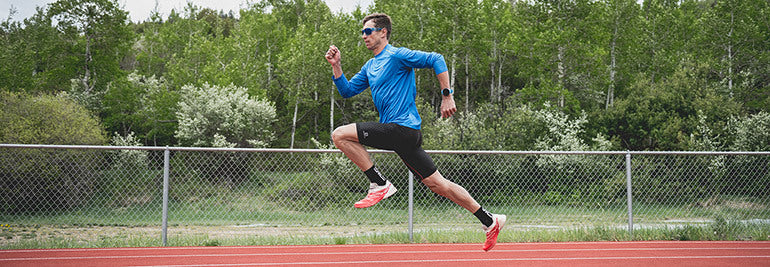
Meet the young-gun tri-athlete from the highest big city in the world
I started with triathlon at age 10
Now I'm 21. Here in Mexico we have a lot of races for young kids - that’s really good! However, not many are very competitive – but I was serious on it from the start! For me, there’s nothing funny going on in the races. The very first race, I was in it to win it. But we have a very big community – and the past five years, it has been growing in the whole country.
I love the bike
It’s my favorite discipline to train. But my best competitively is the run.
I have two big races this year
The 70.3 Worlds in September, and of course, XTERRA Worlds in October. There’s a few people mixing it up between normal tri and XTERRA, but as far as I know, no one really has dedicated themselves to doing both like I have. I would say I have had more success XTERRA racing, because in long distance triathlon I need more time for muscle maturity. It's all a process. I believe with really hard work I can succeed in both as I have done in XTERRA – and that means to be the world champion.
I’m a go-by-feel kind of guy
But I definitely use all the technology – I pay tons of attention to heart rate and wattage on the bike. I use the Spartan and I loved my Ambit – I have always loved the Suunto brand, and the way the brand keeps you motivated to do different things and explore, and I’m really happy about that. It’s a good tool to go out and find some adventures.
I do a 30-hour week of training
I’ll go the mountains in Mexico City – about five sessions of swimming. The bike is pretty difficult – so I do a lot of indoor and mountain bike, about 15 hours, and about nine or ten hours of running, approximately five hours of swimming, and then of course some functional gym stuff.
Living in Mexico City is a plus and minus
It’s at 2000m, so I think sometimes that the altitude gives me a training advantage. But I have to do some mixed training, because that way I can do much more volume. Often I’ll go to sea level at San Diego or to Cozumel for more training.
I always talk with my dad before the race
We talk about the strategy and make the plan. I’m nervous, but it’s a good feeling. I’m mostly a relaxed guy – except on the race course.
And so is my age
At the moment my age is an advantage sometimes – I’m one of the youngest pros, always – and I’ve got a lot of energy. But that also means a lack of muscular maturity. When you’re totally mature with your muscles, you’ll be stronger - simple as that. I still have another six or seven years until muscular maturity, so i’m hoping to be performing at my best then. I think the bike takes the longest to get better at. But everything is going well.
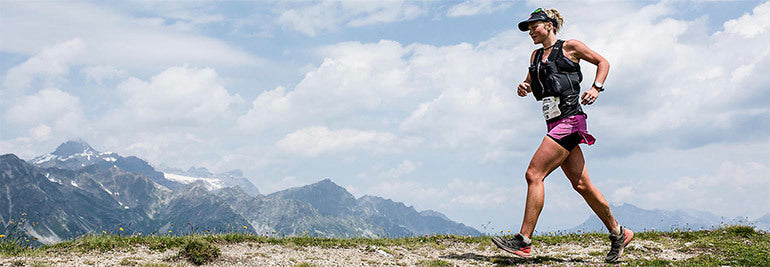

Meet the 21-year-old woman on a six-year running high
I ran my first 100km when I was 16 just one year after I started running
Yep, I went from 0 to 100 in one year at age 16. It’s my dad’s fault. His name is Ashley. It was his second 100k. He’d been running marathons, and once realized he wouldn’t get faster, he decided to go longer. The race was the Surf Coast century.
I’ve run six 100ks since.
And more 50ks than I can even remember. I do them in training – I'll just head out for an afternoon 50. I did three weekends in a row of just 50k runs.
I didn’t love running at the start.
I thought it was hard! Then there I was running a 50k, back to back to back every weekend. It’s amazing what you can do.
But now I’ve been running for six years non-stop.
I started running, and I just did so many easy kilometers with my dad. I built this base very naturally, not forced. Now that I have the base I can do the harder training sessions. I have six years of non-stop running. That’s a big base no matter how old you are.
What I love most is the places I go and the people I meet.
If you didn’t have the people in this sport that were so raw and so organic, it would be a completely different sport. The places you go is really exciting but the people you meet keep you competing.
I want to do the Hard Rock 100
Just because it’s so hard to get into. Transvulcania. And some of that are totally off the grid – ones I don’t even know about, in really cool locations.
I always have a plan, and I never follow it.
I’m pretty reactive and pretty in tune with my body. I’m totally OK with missing a training session or going day by day. I always have a plan but I very rarely follow it. My racing style is not aggressive – I would say I’m someone who eases into it. I start slow and finish strong.
My toughest race? World Sky Running Champs 2016
It was a marathon in Catalonia. I had never seen terrain quite like it. A lot of scree and skiing down scree slopes. I really struggled with it. But I finished the race.
I’m so glad I’m 21...
So I was able to run my last big event: The Marathon du Mont Blanc, 80km of trail in Chamonix. It was the first time I could run the race – because I’m finally 21 years old. But the big goal of the year is the TDS as part of the UTMB weekend.
…but I was a little terrified to start my last race!
I’m a big fish in a small pond in Australia. Now it feels like I’m stepping up to the big leagues. It’s very leveling and I’m a small fish in a big pond – the talent and level is amazing. And more importantly, we just don’t have terrain like this in Australia. I was a bit terrified for my last race! I didn’t have enough time to run every section – only the first climb and last climb, and a few sections in between.
It was 80km.. then 85km… then 92km
The race is called the Marathon du Mont Blanc 80km. They told us the actual course was 85km. Then they modified it to get us more water – but that came with an extra 500m climb and seven more kilometers.
I had a great start, a tough middle section, and strong finish
I felt pretty tired coming into Chamonix, and almost didn’t start the race. The first three hours were great, the next four were terrible, then I hit the halfway point and started counting down the K’s and picking off ladies as I moved up field. I finished in 13h23m, twenty minutes behind 1st place, in a tight battle for 2nd place – I was only a minute ahead of 3rd!
It’s an honor to be a young gun
I know a lot of people are watching me and saying 'maybe it’s safe to start that early.' It’s really exciting to inspire other young runners.
Images by Damien Rosso / Droz Photo
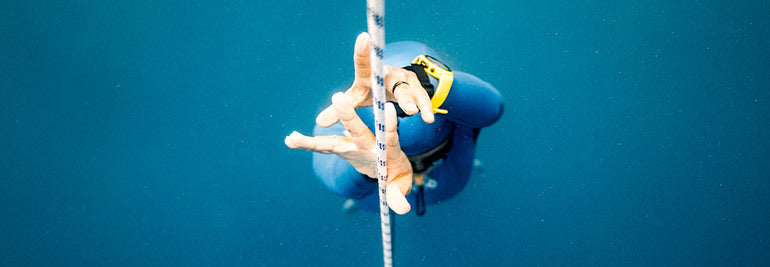

Want to take a great photo? Hold your breath
Diving was something I’d always done.
As a kid, while swimming, I spent more time beneath the surface than above it. But my free dive obsession really started with a SCUBA diving trip in Egypt. During that trip I actually was snorkeling with a friend, and trying to get our depth gauge as deep as we could. Which is a stupid thing to do, by the way. But I was having so much fun, I took a course in freediving… and haven’t been dry since.
My best was good enough for a Dutch National Record.
With fins to 60m, without to 55m, and free immersion to 65m. But I was a very average free diver during the time I was competing. At the time, 2011, the 55m was top 20. It’s nowhere near that anymore.
I’ve had seals kiss my camera
Last year, here in Cornwall, we were swimming with seals. Really shy in the beginning, but after a while, one was interested in my fins. Then he got close enough to my camera dome that his whiskers touched it. That was an interaction where you feel someone looking back at you.
I get in the water with a different mindset than the diver.
We both dive, but they have to go within themselves – all I do is look outside of myself. I look at them, the environment, the light. The same actions with completely opposite goals.
Safety dives helped me train.
At every comp, I did safety dives. There is a diver at depth and 30m. And because I did a lot of that, I knew I had a lot of stamina to do repeated dives. The deep guys go to 100m but do it once. The safety guys – and me – go to 30m, but we do it all day long.
I’m definitely, absolutely doing more work than the guys diving
I’m just not going as deep. I have to swim to 15m, see the diver, swim around him, get in front, crane your neck – and it’s a bad position. They’re going for maximum depth efficiency, I’m going for bursts of speed to get my shot. Totally inefficient as far as diving goes. I don’t become a better free diver by being a free dive photographer.
I love Will Trubridge
I met him first in 2007, but it took me till 2012 to work with him. Now we’re actually friends. He can be a bit shy. It took until I found out he had a wicked sense of humor for us to become friends. It’s nice to work with him – he’s a good delegator who tells you what he wants or expects, and he’s really clear about what he can do.
At Vertical Blue, I do fifty dives a day
Mostly hanging out between 10 – 20m. That’s my office, ten to twenty meters deep. That’s a depth where the light is still good, the background is good, and it’s easily achievable –I can do it on repeat all day long.
My dream dive is The Arch in the Blue Hole in Dahab
It’s an opening in a natural reef. The arch is at 58m, and then there’s a 30m overhang, then you have to go back up. To do the arch, with a camera, that would be spectacular.
All images © Daan Verhoeven / Vertical Blue
Read also 7 tips to help you make amazing diving videos and 10 tips to help you take amazing underwater photos
Learn more about Vertical Blue
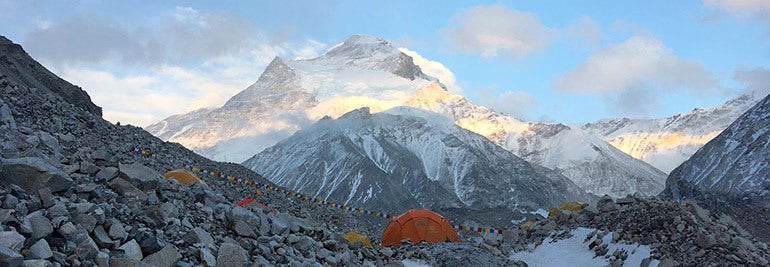

It’s not easy being Emelie! Get in the mind of one half of a mountain-sport power couple
I’ve been to the Himalayas before, but not like this
I’ve been running in the Himalayas plenty, but I’ve never done anything quite this: an attempt on Cho Oyu, an 8000m peak and the sixth tallest mountains in the world.
We did all the acclimatization at home
I was there for less than two weeks – most people take two months to acclimatize. This is very much new-school, fast-and-light alpinism. We did all the acclimatization at home hooked up to a machine that simulated being up at 7500m.
People hear we did an expedition, and they think ‘sherpas’
But that’s not how we did it. That’s not how I want to go the mountains, and not how Kilian wants to go to the mountains.
There was no pressure
This was a trip I did for myself, out of my own pocket – so there was very little pressure to ‘do it for the sponsors’. I wanted to explore for myself and see what was possible for myself.
At sea level Kilian is much faster
But at altitude we start to even out a little bit more – although he will always be stronger and more technical. We were surprised at how fast we were moving at altitude – about 250m an hour at 7500m. That’s pretty fast.
I reach 7500m and 7800m on two different days
The first time was a planned acclimatization. The second attempt was a summit bid – it was our last day, and there was a small weather window. But it got late, bad weather started rolling in, and I simply decided to turn around. Kilian and I discussed that he would go on. I had to wait a few hours for him to come down – during that time I regretted a bit the decision to split up.
Ueli’s death gave us a big scare
We were in Cho Oyu we got the news about Ueli Steck. I didn’t know him personally well, but he was friends with Kilian. He was extreme but he was a hero. His life was an affirmation of everything that is possible. When he died it was hard.
Kilian never considered not following through
There is a big difference between Ueli’s very technical route and Kilian’s Everest Route. I knew Kilian was in a really good shape and responding well to the altitude. I knew he would be fine on Everest in the right conditions. When he was taking longer than expected I began to worry a bit, as Kilian is usually extremely good at predicting his times – but I was getting updates from Seb Montaz.
I don’t want to do Everest
I want to go to some high altitude mountains. I really liked it. Mountains are the foundation, racing is just the topping. I love running and skiing, and I’m fascinated with alpinism, but I’m more concerned about the exposure. I don’t like that. I’m a big fan of life. I don’t see myself moving in the kind of terrain that Ueli did, in the way that he did. Even if I attained the technical skills, I don’t think I want to be here.
I would like to go back to Mt Blanc
Ii have been running up and down many times, but I want to put a record on that one – there’s not so many women doing it. I would like to go back to Cho Oyu to ski, as the winter route looks amazing. Some other bigger peaks as well. But Cho Oyu on skis might be my next dream trip.
I am happy Kilian is done
I want to keep his passport so that he can’t go anywhere for some time!

#howdoirun makes runners stronger
“I was surprised by how well people ran in general, I expected much worse,” says running coach Adam St. Pierre from CTS. Adam and Jason Koop, another CTS coach, have been commenting the running videos.
What were the most common issues you saw in the videos?
“I think the most common issues I saw related to posture. A few people leaned too far forward, bending at the waist, a few people were too straight up (or even leaning back). Proper running mechanics starts with posture. Without good posture it is very difficult to have an effective arm carriage or sufficient hip flexion and extension. If hip flexion is limited, it is very difficult for a runner not to overstride. If hip extension is limited, it puts strain on the lower back and limits the ability of the gluts to produce power,” Adam St. Pierre explains.
Any tips on how to move forward?
“Stand tall and run happy, that fixes most issues,” concludes coach Jason Koop.
LEARN 8 ESSENTIAL RUNNING FORM DRILLS
And the winners are…
Three of the most inspiring #howdoirun videos won Suunto Spartan Sport Wrist HR watches. Here are the winners.
Tim Larsson from Åre, Sweden
One last run before China. So, @suunto, how is my form? #suuntorun #howdoirun #xtrailadventurerace #xtrail #älskaåre
A post shared by Tim Larsson (@tmlarsson) on May 30, 2017 at 2:22am PDT
Tim Larsson comes from Åre, the mountain capital of Sweden. Coach Adam gave Tim mostly positive feedback, but pointed out an issue Tim was already aware of. “Due to weak hips I have a slight inward rotation on my left foot. This is something I have been working on and it feels good to get a confirmation,” says Tim.
“I have a small dream of running the entire Kungsleden (“The King’s Trail”), a 450-kilometer multiday trail run, here in Sweden in the end of the summer. So my focus now is simply on injury prevention so that I can go on for long periods. I am also trying to become a better, more efficient climber for the skimo season next winter.”
Aaron Harwood from Sydney, Australia
Filmed for the Suunto "How do I run" Contest on Sunday 11 June 2017. This was filmed by my awesome eight year old son. The time at the end is my finish time from the Sydney Morning Herald Half Marathon last month. I need some tips to run faster 😃. What a great morning. Thanks Suunto. #howdoirun #suunto #running #triathlon
A post shared by Aaron Harwood 🏊🏻🚴🏻🏃🏻 (@aaronbharwood) on Jun 10, 2017 at 10:04pm PDT
“Adam’s feedback has been really helpful. I was aware that I heel strike causing a deceleration at each stride. I was unaware of my posture and how that was making me overstride,” says Aaron Harwood from Sydney, Australia.
“As I run now I’m constantly thinking about maintaining an upright posture. I’ve noticed in the last few days that I’m now working other muscles as I can feel a difference during recovery. By reducing the tendency to overstride, I’m also able to maintain a quicker cadence. I will be adding high knee drills into my routine and I’m sure I’ll be able to start seeing my speed increase.”
To keep his motivation high, Aaron already has a goal in his mind “I’d like to run the New York marathon next year.”
Sarah Brough from Seattle, WA, USA
Posting this for the @suunto #howdoirun event ... I never really was an avid runner. Up until a year and a half ago, I couldn't even make it 1.5 miles. But, after having my second kid, I felt like I needed to improve my personal health and so, I started to run. Now, running has become an outlet for me, a way to challenge myself and see what my body can accomplish. There have been a lot of ups & downs, but through a lot of training, I've been able to accomplish goals that I never imagined I could, like running a full marathon & 2 half marathons. I've come to love the mental game, the runner's high and the sense of accomplishment I feel once I've beaten a PR. I want to keep improving which is why @suunto I'd love to know #howdoirun 🏃🏼 #suuntorun #suunto
A post shared by Sarah Brough (@sarbrough) on Jun 8, 2017 at 9:48pm PDT
“I've been able to work on coach Adam St. Pierre’s suggestions on a few runs already and honestly, it's been tough to change my stride. But, it feels a lot better when I do it. Also, I was able to go faster when I really focused on it, which is great because that's what I am most focused on right now in my training,” says Sarah Brough from Seattle, WA, USA
Sarah has set herself a goal to run two half marathons, with one of them being under two hours. “I just finished my first half in May & got a time of 2:05. My second one is in the end of August & I'm hoping to shave off those last 5 minutes, so I can reach my goal.”
Congratulations, Sarah, Tim and Aaron. And thank you everyone for submitting your videos Happy running!
Main image by Matt Trappe
READ AN INTRO TO DISTANCE RUNNING TECHNIQUE

Simon Donato takes on The Grouse Grind
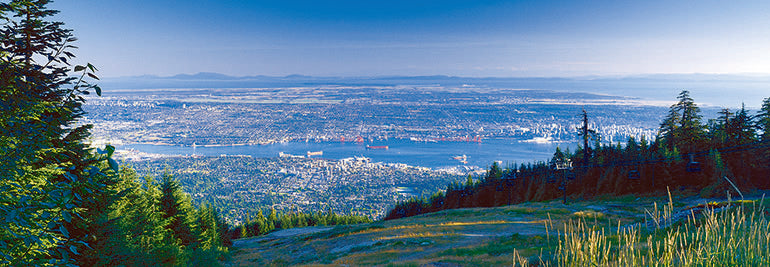
The Grouse Grind is an iconic trail up the face of Grouse Mountain, overlooking Vancouver, British Columbia, Canada. The trail is 2.9 kilometers long, with an elevation gain of 853 meters. Locals often refer to the trail as “Mother Nature’s Stairmaster.”
On Tuesday, June 20th Suunto Canada will be sponsoring the Suunto Multi-Grind Challenge. From dawn till dusk, racers will challenge each other to achieve the most Grouse Grind ascents in a one-day period. The current Multi-Grind Challenge record is 16 ascents! Or, over 13,500 meters of climbing!
What appealed to you about this race?
I’m attracted to this race because it’s got all the elements that I enjoy: Long day, vertical terrain, legendary route, and I know that I’ll get to face some mental battles along the way. The Grouse Grind is such an iconic route that one lap just doesn’t do it justice.
Any tips for tackling the Grouse Grind? There’s a lot of steps…
haha - Indeed. As with most really huge endurance challenges, this race will be won in the mind - not the legs. My goal is to keep the steps smooth and natural, not to push the pace too hard in the early stages, and try to keep it comfortable for as long as possible.
Have you ever done anything like this before?
I’ve never done a “stair climb” or “vertical” challenge per se, but I’ve put in many long days in the Canadian Rocky Mountains, both hiking and running for fun or chasing FKTs.
Any special strategies for tackling this much ascent in such a short time frame?
This race is unique because you get to rest on the descent by taking the Grouse Mountain Skyride, so trying to time things in such a way that you are not waiting for a tram car is critical. Eating, gear changes, etc., will all have to be done on the tram ride between ascents. One of the main goals is to climb at a very steady tempo - so that my splits are extremely similar lap - lap and avoid wasted time.
What will be your nutritional plan for the race?
My plan will be to take in as many calories as my body can handle - especially late in the race as that’s when I typically fade due to fatigue and a reduced desire to eat. Fatigue makes eating harder, and not eating enhances fatigue -it’s something I’ve struggled with in the past. In terms of calories - I’m going for as much real food as possible - and of course lots of Stoked Oats.
What performance metrics will you be focusing on during the race?
My biggest goal will be to maintain even splits…even if it feels painfully slow in the early stages. There is no benefit to reaching the summit after a hard push only to wait for the tram to arrive and take you back down.
Most importantly, the current record is 16 Grinds, how many do you think you can do?
Ha ha, the million dollar question. I would be happy with 14, and thrilled with 15.
What keeps you motivated during the climbs? How do you stay focused on the trail?
Motivation has always been about doing my best. It’s a question that I ask myself regularly during tough events and helps me push through the most difficult spots. In this case, I won’t be motivated by an absolute number, but more in maintaining a specific pace, and sticking to a well-designed nutrition plan.
How does your Suunto help you succeed in events like these?
I’ve always loved Suunto products - ever since I got into adventure racing in 1998. I think the bottom line is that I trust Suunto products - from watches to compasses and in a race where pacing is critical to success, having a watch (Suunto Spartan) that I trust gives me peace of mind. I know the watch will go as long as I do on the day and give me the metrics that I need to do my best - simple as that.
Any advice to newcomers of the Grind?
The Grind is an epic climb for many reasons, and tackling the Multi-Grind Challenge will move that needle well into the redzone. The most important elements to success in my opinion are setting goals (pacing, duration, etc.), managing nutrition, and adhering to a well thought out race plan. Really difficult events will challenge even the most hardened competitors and if there is no plan, or commitment to achieve a goal, then it’s always easier to throw in the towel when the going gets tough. Little things like appreciating the experience when you’re riding a high, to understanding that the lows don’t last forever will help pull athletes through this test!
Image of Simon Donato © Luis Moreira/Adventure ScienceGrouse Mountain images © Grouse Mountain


