






Suunto Blog


Every Mile, a Decision: Suunto at the 2026 Western States 100
A finish time is the headline. The hundred miles behind it are the story.
The 2026 Western States 100 will be remembered as the year the records fell. On one of the coolest race days in the event’s 53-year history, fast conditions met one of the deepest fields the race has ever seen, and the results rewrote the books from the front of the pack to the back, with a record share of the field reaching the finish.
For Suunto, it was the kind of weekend we celebrate:
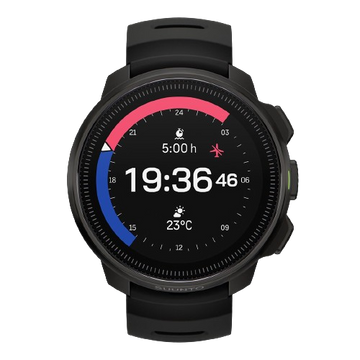
Suunto athletes delivered standout performances with two signature watches built for different trail running needs:
Jennifer Lichter — women’s 1st, 15:28:05, Suunto Race 2
Tara Dower — women’s 6th, 16:13:07, Suunto Vertical 2
Ryan Montgomery — men’s 3rd, 13:53:55, Suunto Vertical 2
Zach Miller — men’s 5th, 14:20:09, Suunto Vertical 2
Jeff Mogavero — men’s 7th, 14:38:36, Suunto Vertical 2
Will Murray — men’s 9th, 15:23:12, Suunto Vertical 2
Jennifer Lichter won the women’s race in a course record. Ryan Montgomery ran onto the men’s podium. And across the field, Suunto athletes turned in one of their strongest days on the trail.
But the times only tell you who was fastest. They do not tell you about the climb out of Olympic Valley before sunrise, the canyons that bake even in a cool year, the river crossing at mile 78, or the hundreds of small choices that decide whether a good day becomes a great one. That is the part of Western States a performance watch is truly built for.
A truly demanding course
Western States runs 100.2 miles (161 km) from Olympic Valley to the track at Placer High School in Auburn, California. It climbs roughly 18,000 feet (5,500 m) and descends close to 23,000 feet (7,000 m) along the way. The race opens with a long climb to the Escarpment in the first few miles, then works through high country, long descents, exposed canyons, and the American River crossing at Rucky Chucky before the final push into Auburn.
A course like that does not reward speed alone. It rewards pacing that holds for fifteen hours or more, climbing managed so the legs are still there at mile 80, navigation when the trail is remote and the light is low, and battery that outlasts the clock. Every one of those is a decision, made again and again, mile after mile.
The right watch does not make the decision for you. It gives you what you need to make it well.
Jennifer Lichter and the Suunto Race 2
Lichter came to Olympic Valley for her first 100-mile race, having already set a course record at the Black Canyon 100K earlier in the year. She ran Western States the way the course asks to be run. She settled into an effort she believed she could hold all day, let the race come to her, and took the lead for good at Devil’s Thumb, mile 47.8. She crossed the line in 15:28:05, 88 seconds under the course record set in 2023 by fellow Suunto athlete Courtney Dauwalter.
“I just kept telling myself: trust yourself, trust the process, and what will be will be,” Lichter said after the finish. “If you want to win, you have to have a winner’s mindset. That’s what it takes.”
On her wrist was the Suunto Race 2.
Race 2 is built for exactly that kind of race: fast, focused, and full of quick glances at speed.
Its bright 1.5-inch AMOLED display stays readable in canyon glare and low light, so a runner moving over technical ground gets the number in the half second she can spare.
Dual-band GPS holds accurate pace and distance where terrain and tree cover would scatter a weaker signal.
Climb guidance shows how much ascent is left in a section, so effort goes to the climbs that matter and stays in reserve for the ones still ahead. And up to 55 hours of GPS battery covers a 100-mile race, cutoff and all, with margin left over.
Lichter’s win gave all of that a human shape: controlled from the high country to Auburn, and clear about the effort the whole way.
Ryan Montgomery and the Suunto Vertical 2
Montgomery’s third place was its own piece of history. His 13:53:55 was a personal best by nearly two hours, and for the first time ever, the top three men all finished under 14 hours. His time would have won any previous edition of the race.
“I threw all the fear away and just ran my race,” Montgomery said. “I wanted to feel pressure, and I definitely had that today. I got the best of myself.”
Western States was fast in 2026, but it is still a mountain 100, and the back half is no place for uncertainty. Montgomery ran it on the Suunto Vertical 2, the watch built for the ultra-distance end of the sport.
Up to 65 hours of GPS battery gives a runner margin the race plan can lean on. Offline maps and full navigation keep the route clear through remote terrain, where a phone is dead weight and cell service is a rumor. And an integrated LED flashlight earns its keep in the dark hours that bookend a long day on the trail.
Montgomery was one of several Suunto athletes to run well. Nine Suunto athletes finished the race, eight of them inside the top ten, with Zach Miller, Jeff Mogavero, Will Murray, and Tara Dower all in the mix on a record-setting day.
Two watches, one idea
Race 2 and Vertical 2 sit at different ends of the same shelf. Race 2 is the pick when the priority is speed, a clear display, and a lighter watch for race day. Vertical 2 is the pick when the priority is reach: longer battery, a rugged build, and navigation for remote mountain routes. Both are built on the same belief, that a trail runner should have clear, reliable information exactly when the route turns hard.
Most runners will never race Western States. Many will never run 100 miles. But every trail runner knows the feeling at a trailhead: the route ahead will ask questions, and you would rather meet them with confidence than with hope.
That is where Suunto has spent 90 years, and where both of these watches are meant to live. From Olympic Valley to Auburn, and from a record-setting Saturday to an ordinary Tuesday run, the job is the same. Help you make the next good decision, and then the one after that.


VO₂ Max: Definition, Age-Based Charts, and How to Improve It
If you train for endurance, VO₂ max is one of the most honest numbers you can track. It cuts through how a session felt and tells you something concrete about your engine: how much oxygen your body can actually use when you push hard. Better still, you don’t need a lab to follow it, because a compatible Suunto watch estimates it from your everyday runs and walks.
At a glance
VO₂ max is the maximum amount of oxygen your body can use during intense exercise, usually expressed in millilitres of oxygen per kilogram of body weight per minute (ml/kg/min).
It’s one of the most reliable indicators of aerobic fitness, cardiovascular endurance, and, to a point, your endurance potential.
A higher VO₂ max is linked to better performance in running, cycling, trail running, triathlon, and cross-country skiing, and to a lower risk of cardiovascular disease.
It varies widely from person to person with age, sex, training, and genetics.
You can estimate it with a fitness test or a compatible sports watch.
Many Suunto watches let you track how your VO₂ max changes over time.
What is VO₂ max?
VO₂ max, or maximal oxygen uptake, is the most oxygen your body can take in, transport, and use during hard physical effort. It’s measured in millilitres of oxygen per kilogram of body weight per minute (ml/kg/min), and the higher it is, the more efficiently you produce energy during prolonged exercise.
That efficiency is why VO₂ max matters so much in endurance sports: running, trail running, cycling, triathlon, cross-country skiing, and hiking all draw heavily on it.
Why VO₂ max matters
Knowing your VO₂ max gives you an objective measure of fitness that goes beyond how a workout felt. Practically, it lets you:
Assess your fitness level: it’s a widely recognised marker of cardiovascular fitness and endurance capacity.
Track your progress: watching it shift over weeks or months shows whether your training is actually working.
Fine-tune your training: paired with heart rate data, it helps set training zones that match your current fitness.
Understand your health: a higher VO₂ max is generally associated with lower cardiovascular risk and greater longevity.
How to calculate VO₂ max
There are a few ways to measure or estimate VO₂ max, trading accuracy against convenience.
1. Laboratory exercise testing
The gold standard is a maximal exercise test with respiratory gas analysis in a lab. Intensity ramps up while you breathe through a mask, and your oxygen intake and carbon dioxide output are measured in real time. It’s direct and highly accurate, but it needs specialist equipment and supervision.
2. Field tests
Several field tests estimate VO₂ max without lab kit, using the speed or distance you can sustain. Common protocols include the Cooper Test, the Half Cooper Test, the VAMEVAL Test, and the Léger-Boucher Test.
3. Calculators and indirect estimates
Some apps and training platforms estimate VO₂ max from your performance, pace, speed, or heart rate. They’re less precise than a lab test, but they’re well suited to tracking trends over time.
How to measure VO₂ max on a sports watch
Many sports watches now estimate VO₂ max automatically, drawing on your heart rate, pace or speed, exercise duration, GPS data, and training history.
Suunto estimates VO₂ max, shown as your fitness level, from data collected during outdoor running and walking. The watch reads your heart rate response to sustained effort alongside pace and movement data to gauge your aerobic fitness. Record a run or walk of at least 15 minutes and the algorithm has enough to work with; keep training, and the estimate updates to track your endurance trend.
On earlier models such as Suunto 9 and Suunto 7, it appears under Fitness level.
On newer devices such as the Suunto Vertical 2, Suunto Race 2, Suunto Run, Suunto Race S, Suunto Ocean, Suunto Race, Suunto Vertical, and Suunto 9 Peak Pro, it lives in the Progress view, and you can also see it in the Suunto app.
It isn’t a lab measurement, but as a practical indicator of how your cardiovascular fitness is trending, it’s hard to beat for everyday training.
What’s a good VO₂ max?
It depends on your age, sex, and fitness level. As a rough guide for healthy adults:
Under 30 ml/kg/min: Low
30–40 ml/kg/min: Average
40–45 ml/kg/min: Good
45–50 ml/kg/min: Excellent
50+ ml/kg/min: Superior (highly trained)
These are general reference points, though. To judge your own score fairly, compare it with people of the same age and sex, which is exactly what the charts below let you do.
VO₂ max charts by age for men and women
VO₂ max declines naturally with age and differs between men and women. Use the reference values below to compare your estimate with others of the same age and sex. Treat them as general guidelines rather than diagnostic criteria; individual results vary with training history, genetics, health, and testing method.
Men’s VO₂ max chart (ml/kg/min)
Age
Poor
Fair
Average
Good
Excellent
Superior
20–29
<33
33–36
37–41
42–45
46–52
>52
30–39
<31
31–34
35–39
40–43
44–50
>50
40–49
<28
28–32
33–36
37–40
41–46
>46
50–59
<25
25–29
30–33
34–38
39–43
>43
60–69
<22
22–25
26–30
31–34
35–41
>41
Women’s VO₂ max chart (ml/kg/min)
Age
Poor
Fair
Average
Good
Excellent
Superior
20–29
<23
23–29
30–35
36–41
42–46
>46
30–39
<20
20–27
28–33
34–39
40–44
>44
40–49
<17
17–24
25–31
32–35
36–41
>41
50–59
<15
15–21
22–28
29–34
35–39
>39
60–69
<13
13–20
21–24
25–30
31–35
>35
*Reference ranges are adapted from the normative cardiorespiratory fitness classifications in the American College of Sports Medicine (ACSM) Guidelines for Exercise Testing and Prescription (11th edition).
On average, women tend to have lower VO₂ max values than men, largely due to physiological differences in muscle mass, blood volume, and haemoglobin levels.
How to interpret your VO₂ max result
The same number can mean very different things depending on who you are. A VO₂ max of 35 ml/kg/min might be average for a 30-year-old man, good for a 40-year-old woman, and excellent for someone over 60.
For most recreational athletes, watching how your own VO₂ max moves over time is far more useful than chasing elite figures. Steady improvement, even a modest one, is usually a sign your training is doing its job.
What affects VO₂ max
VO₂ max is the product of several systems working together:
Heart: cardiac output sets how much oxygen reaches your muscles.
Lungs: they load oxygen into your blood and clear carbon dioxide.
Oxygen transport: haemoglobin carries that oxygen around the body.
Muscles: they have to use the available oxygen efficiently.
Genetics: a meaningful share of your potential is inherited.
Age: without regular training, VO₂ max gradually declines.
The benefits of a higher VO₂ max
Raising your VO₂ max pays off in several ways:
Better performance: you can hold a higher intensity for longer.
Greater endurance: fatigue arrives later in prolonged efforts.
Faster recovery: a more efficient cardiovascular system helps you bounce back.
Healthier heart: better aerobic fitness is tied to lower cardiovascular risk and all-cause mortality.
An edge across sports: running, trail, cycling, triathlon, cross-country skiing, and hiking all reward it.
How to improve VO₂ max
Lifting your VO₂ max comes down to consistent training and smart recovery. The strategies that move the needle most:
1. Add high-intensity intervals
Interval and HIIT sessions are among the most effective ways to raise VO₂ max. A classic example: five reps of 3 minutes at high intensity, with 2 minutes of active recovery between each.
2. Build a strong aerobic base
Longer, low-to-moderate sessions improve the underlying efficiency of your aerobic system, the foundation everything else sits on.
3. Vary your intensity
Rotating easy endurance, threshold work, and intervals drives complementary adaptations rather than hammering the same system.
4. Stay consistent
Long-term consistency beats the occasional brutal workout every time.
5. Protect recovery
Quality sleep, solid nutrition, good hydration, and planned rest days are what let fitness build while keeping injury risk down.
VO₂ max vs VMA: what’s the difference?
VMA (maximum aerobic speed) is the running speed at which you hit your VO₂ max during a progressive test. In other words, VO₂ max measures your capacity to use oxygen, while VMA measures the speed at which that ceiling is reached.
Two runners can share a similar VO₂ max yet post different VMA values, depending on running economy, technique, and experience.
Profile
VO₂ max
VMA
Beginner
40 ml/kg/min
12 km/h
Regular runner
50 ml/kg/min
15 km/h
Experienced runner
60 ml/kg/min
18 km/h
Improving VO₂ max generally lifts your VMA too, but dedicated speed and technique work is still what turns capacity into race pace.
VO₂ max FAQ
1. What’s the average VO₂ max?
Roughly 35–45 ml/kg/min for men and 25–35 ml/kg/min for women, with about 30–40 ml/kg/min considered average fitness for most adults.
2. What’s a good VO₂ max for men?
Generally around 40–45 ml/kg/min, with 45–50 excellent and above 50 superior, depending on age.
3. What’s a good VO₂ max for women?
Generally around 32–40 ml/kg/min, with 40–45 excellent and above 45 superior, depending on age.
4. Does VO₂ max decline with age?
Yes. It gradually falls as you get older, but regular exercise can slow that decline significantly.
5. Can you improve VO₂ max after 50?
Absolutely. Meaningful gains are still very achievable with an appropriate, progressive, and consistent training program.
6. Do sports watches really measure VO₂ max?
Not directly, the way a lab does. They use mathematical models based on heart rate, speed, workout duration, and training history to estimate your fitness level.
7. What’s the difference between VO₂ max and heart rate?
Heart rate shows how your body responds to exercise in the moment, while VO₂ max estimates your maximum capacity to use oxygen. They complement each other: heart rate tracks intensity in real time; VO₂ max gives the longer-term view of your aerobic fitness.
The takeaway
VO₂ max is one of the clearest measures of aerobic fitness, and it’s most useful when you follow your own trend rather than compare yourself to elites. With a compatible Suunto watch estimating it from your everyday training, you can see the effect of your work over time and adjust with confidence.
Explore Suunto watches that track VO₂ max and keep your fitness moving in the right direction.


