




Suunto Blog


Big data for Vertical Week 2019 is here: find out who came out on top!
When we crunched the statistics from all the training around the world during Suunto World Vertical Week 2019, we felt our hard work had paid off. It had given you all the excuse to chase meters outside, whether on behalf of your nation, chosen sport or for your own challenge – exactly our intention.
There’s something about the sight of a hill or mountain in front of us that calls us to push ourselves. The challenge of the ascent is just as satisfying as the view from the top. That’s why we do it! Well done to everyone who participated.
Top countries
This year, we first report a major upset. In the previous two years, Austria has come out on top as the nation that achieves the most vertical gain by average. Not this year – the Alpine nation has been knocked off its perch. This year, Italy, Slovakia and Slovenia, all mountainous nations, climbed more than Austria. But more surprising, Portugal also came in ahead of Austria.
In the last two years the Swiss have also come in near the top, but this year they have dropped to the eighth position. What’s happened in Austria and Switzerland? Someone tell us!
Honorable mention
This year, Spain deserves an honorable mention. Spain came first in three divisions: totals per country, mountaineering, and trekking. It was also in the top five for four different activities: mountaineering, trekking, mountain biking and cycling. All up, Spain features in six of the nine country-related lists below, the only country to do so. Well done Espana!
Here are the results by nation
While these numbers might not seem so mind-blowing, remember they are averages, and a high average is indicative of many big days out in the hills.
Italy 385 m
Slovakia 360 m
Slovenia 346 m
Portugal 342 m
Austria 337 m
Spain 308 m
Switzerland 288 m
France 283 m
Canada 276 m
Norway 261 m
Totals per country
This year we also decided to look at the totals per country. In these countries, World Vertical Week participants have been really active and gotten out there to climb, even only a little, to add on their country’s total number. These little efforts have added up.
Spain 645.000 m
France 546.000 m
Italy 379.000 m
United States 377.000 m
China 250.000 m
Austria 216.000 m
United Kingdom 183.000 m
Japan 150.000 m
Norway 142.000 m
Switzerland 140.000 m
Average ascent by activity
At least as interesting as the country numbers are the activity specific stats. From these, we can see that skiers clearly put in the biggest average days. Trail running and mountain biking are probably under-represented because it’s winter in the populous Northern Hemisphere.
Like Vertical Week 2018, ski touring, mountaineering and trail running came out on top this year. The question is, which nations did the most of each?
Ski touring 830 m
Mountaineering 594 m
Trail running 474 m
Mountain biking 355 m
Trekking 311 m
Hiking 213 m
Nordic skiing 199 m
Cycling 193 m
Running 100 m
Activity by country
Ski touring
France 1127m
Italy 1085m
Austria 864m
Switzerland 828m
Germany 776m
Two countries pass 1000 m of vertical gain by average!
Mountaineering
Spain 1071m
UK 947m
Poland 798m
USA 716m
Germany 651m
Trail running
Hong Kong 1176m
Japan 901m
Malaysia 813m
China 765m
Portugal 713m
Asia dominating, showing the growing popularity of the sport in the region!
Mountain biking
Italy 476m
Slovakia 474m
UK 437m
Spain 422m
Austria 394m
Cycling
Colombia 499m
South Africa 485m
Israel 446m
Spain 438m
Italy 363m
These nations have favorable weather for cycling in March!
Nordic skiing
France 379m
Canada 321m
USA 285m
Norway 243m
Austria 212m
Trekking
Spain 566m
Italy 527m
Malaysia 363m
Italy 362m
Poland 304m
Individual top performances
While we can’t give away too much information here, such as who and where, we can share some insight in the individual top performances over the week: To be on the pointy end of the rankings one had to climb more than 10000 meters over World Vertical Week. And to stand out with a single activity one had to climb 4000+ meters in one go!
Thank you, everyone, for participating!
Read three inspiring stories from the World Vertical Week!
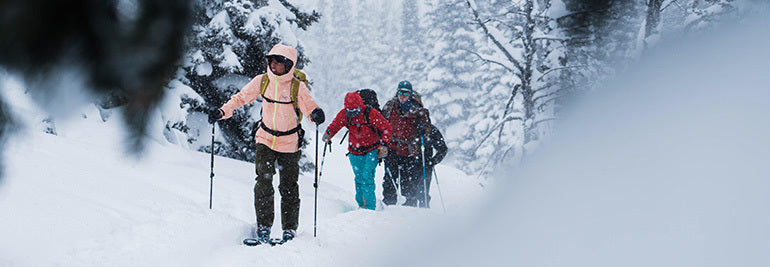

Chasing meters: top stories from Vertical Week 2019
The fourth annual Suunto Vertical Week is coming to a close and we have selected three winners of the week’s photo contest on Instagram. Each of them will receive a powerful Suunto 9 to record their efforts! We received many other inspiring images and stories (#verticalweek) – thanks to everyone for their contributions! Keep climbing!
Baby in tow in Norway
We were very impressed by Hilde Hoff Nordskar in Norway. She climbed 3246 m in a week, while towing her seven-month-old baby boy, who slept through it all. Some have it easy! Well done, Hilde!
“Vertical Week was overall very hard and fun and brought some new inspiration to my maternity leave,” Hilde says. “We live close to a forest and my daily goal was to summit the top of a nearby peak called 'Solobservatoriet' (580 m). With my seven-month-old son in the wagon behind, I started every morning skinning up the hill no matter the weather. The highlights was to experience the uphill in all these different winter wonderland conditions and finish every session with a big smile on my face and a very rested kid.”
View this post on Instagram
Punta di Terrarossa 🏔 3246 meters climbing in a week 🎿👶🏻 #VerticalWeek #Suuntoapp @suunto_norge @suunto @thule #thulebringyourkids #dæhlie
A post shared by hildehoffnordskar (@hildehoffnordskar) on Mar 9, 2019 at 8:48am PST
Big training block in California
Eric Triplett in sunny California enjoyed a big week, climbing 3500m. This beautiful shot of sunrise from Mount Wilson illustrates the motivation behind the call to scale peaks; massive rewards for our hard work.
“Suunto Vertical Week was the perfect way to finish up a three month training block for my upcoming race,” Eric says. “The race features 3000 m of climbing over 56 km so my primary goals for Vertical Week were to simulate the amount of gain relative to the distance of my race and to accumulate at least 3000 m of gain. I’m happy to say I was able to complete 3500 m for the week including a 33 km run with 2100 m of vertical. Thanks to Suunto for putting on this motivating celebration of vertical!”
View this post on Instagram
The sun rises on the last day of #VerticalWeek 2019 // It’s been a while since I’ve cracked 11,000ft of gain in a week so I made it a goal given both Vertical Week and that 9 Trails is coming in just two weeks. Admittedly going beyond 10,000ft seems to bring on the sore knees and other random leg pain but that only serves to highlight what to work on in the future // Been super excited about getting my hands on “Training for the Uphill Athlete” by House, Johnston and Jornet. I think it’s going to help take things next level. // I’m also very happy with where @Sagerunning training has taken me in the last 3 months. I’ve never thought I could maintain the kind weekly mileage that I have for so long. I was always afraid to put intervals into 20mi+ runs but I survived. It hasn’t been easy but listening to my body and making small adjustments has got me through. // #utlrarunning #trailrunning #runinrabbit #borntorunfree #rabbitTrail #RADrabbit #gotailwind #timetoplay #salomon #suunto #salomonrunning #9T #NineTrails #sagerunning #SanGabrielSunday #longrun #ANF
A post shared by Eric Triplett (@fleshymutant) on Mar 10, 2019 at 9:08pm PDT
New season in Finland
Janne Korpela in Finland has begun a new training block now spring has nearly arrived. It hasn’t been in a walk in the park, either, on some days finding himself waist deep in snow. Keep going, Janne!
“Vertical Week was surprisingly good, since it was only the third proper training week of the year for me with 19 hours of training,” he says. “The highlight of the week was the first day, when a six hour session was surprisingly easy. And last Sunday was a beautiful spring day!
“The goal was 8000m in eight days, but we pushed it a bit yesterday to climb the height of Everest (8848 m)! I did all the climbing on an old ski slope close to my home. One lap is about 35 meters of climbing!”
View this post on Instagram
A post shared by Juosten (@juosten_) on Mar 10, 2019 at 6:02am PDT
Lead image: © Dylan Totaro / Suunto


Suunto World Vertical Week 2019
For some of us a climb is a challenge, an obstacle to overcome. With training we get stronger and can climb the same hill easier – or faster. But it usually does not last long before we set our eyes on even bigger or faster or more challenging climbs.
For others a climb is an adventure, a promise that once we reach the top, col or ridgeline new horizons will open up and broaden our views and, on the way down, we will get to play with gravity.
Whatever your motivation, Suunto’s annual Vertical Week is here again!
Suunto World Vertical Week 2019 starts on Sunday, March 3rd and ends on Sunday, March 10th.
Put on your running shoes, hop on your bike or release your heels and start skinning up the hill. Track your adventures with your Suunto watch, upload your activities to Suunto app and, by the end of the week, we’ll know who climbs the most in a week. And it’s not only about individual performances: we want to see which country averages most vertical during the week and which activity takes you up the biggest climbs.
To participate, join the challenge in Suunto app!
SHARE YOUR EXPERIENCE AND WIN A SUUNTO 9
Share your Suunto World Vertical Week experiences on Instagram using Suunto app’s photo sharing with data overlays and use tag #VerticalWeek. Three of the most inspiring posts will win Suunto 9 watches.
Terms and conditions apply. Read them here.
Learn how to share your activities using Suunto app
Don’t have Suunto app yet? Get it now!


Fuelling the engine: Talking nutrition with Ultra Cycling Man
© Luigi SestiliItalian endurance cyclist Omar di Felice pushes his body through tough conditions, subzero temperatures in Norway’s icy reaches, or sweltering heat in Spain over summer. Extremes are his speciality.
This is only possible, he says, because of his careful nutrition plans. “When you keep pushing your body to the limit everyday you have to introduce the right balance in terms of calories and nutrients to get enough energy,” he says. “The first thing is to correctly balance the right quota of fat, proteins and carbohydrates”
This becomes more challenging while traveling or on a long training ride, which is why careful forward planning is so essential. Fortunately, di Felice gets supported by his girlfriend, a food blogger in Rome. She specializes in pastries, and makes di Felice plenty of cake.
© Luigi Sestili
Long distance, multi-day, rides, burn through a lot of calories quickly. That’s why di Felice follows a “fat-based nutrition” plan. “Fat is the best fuel when you are riding for hours and days, and you need lots of energy to stay focused on a long distance ride,” di Felice says. “At the same time, protein is important so you don’t burn too much muscle. And carbohydrates are important for the brain and to have quick available energies, but you need to be careful not to have too much.”
When he’s out on a long ride and doesn’t have time to stop to prepare a meal, di Felice has a few quick, go to meals, including one of his favourite foods: ice cream. Bread with ham, cheese and cake are his other regulars.
“I always try to keep in mind that, without the right energy supply, I won’t be able to do my daily training,” he says. “Nutrition is really important in my life.”
Power bar recipe: Cioccoriso
Ingredients:
300 grams dark chocolate200 grams puffed ricecoconut flakes
Method:
Put the puffed rice in a bowl with the melted chocolate and mix well. Then take a thermometer and check the temperature. Keep mixing, when it’s between 32-33°C, you can start to make the bars with a spoon on baking paper. Why not before? Because to get a good result with chocolate you have to find the right temperature, only this way the cioccoriso will be compact and will remain shiny. Leave the cioccoriso at room temperature for 40 minutes and you will see the bars reach perfection!
Recipe from: Sara De Simoni - Burro & Miele
Lead image: © Omar di Felice and © Luigi Sestili
For more articles in the Fuelling the Engine series click below:
D.I.E.T (DISASTER IMMINENT EVERY TIME ®) AND THREE UNCHANGING PRINCIPLES OF NUTRITION FOR ATHLETES.
FUELLING THE ENGINE: TALKING NUTRITION WITH EMELIE FORSBERG.
FUELLING THE ENGINE: TALKING NUTRITION WITH MELISSA HAUSCHILDT.
FUELLING THE ENGINE: TALKING NUTRITION WITH LUCY BARTHOLOMEW.
FUELLING THE ENGINE: A COMMONSENE APPROACH TO NUTRITION.


Fuelling the engine: Talking nutrition with Ryan Sandes
Avocados are a staple in Sandes’s diet. © Craig Kolesky / Red Bull Content Pool
Back home in his native South Africa, ultra runner Ryan Sandes is partial to a good braai (the South African version of a barbeque). While he generally eats whole foods most of the time, Sandes avoids getting strict or uptight about his diet. He takes a pragmatic approach.
“I believe it's important to enjoy life as well,” he says. “I don’t weigh x amount of protein, and x of carbs, I just try to eat a balanced diet with as many whole foods as possible. I try to listen to what my body is craving.”
Despite being from meat loving South Africa, Sandes and his wife Vanessa have drastically reduced their meat consumption to only once or twice a week. Instead, they focus on eating unprocessed, natural food.
“As an athlete it’s very easy to slip into taking lots of recovery shakes to try to get the goodness back into your body,” Sandes says. “But I don’t think you can replace eating good whole foods.”
Sandes ran the Great Himalayan Trail this year. © Dean Leslie / Red Bull Content Pool
In busy times
Forward planning is essential for athletes. And having a good meal plan is just as important as having a clear training plan.
Sandes often makes a big dish, with multiple portions, at the beginning of the week so he has something easy available if it’s a busy week. It’s helpful doing this, he says, because of the tendency to get a little lazy, especially later in the week.
“I often eat quite a lot of eggs, and avocados and salad, things that are easy to put together,” he says.
Sandes (and his dog) remains partial to a braai (barbecue). © Ryan Sandes
Go to meals
Sandes enjoys pizza so, when he needs an easy meal, he buys locally made pizza bases, smothers them vegetables and salad, and bakes them. Burgers, smoothies, rye bread with honey, muesli and plenty of boiled eggs are all part of his regular diet, too.
And his secret supplement is bone broth.
“These days in first world countries people eat the best cuts of meat, whereas way back in the hunter-gatherer days, if they hunted a buck they would eat the entire animal, including boiling all the bones and drinking the broth,” Sandes explains. “A lot of the good meat cuts don’t have all the essential fats, but bone broth has that. It’s not my favourite thing, but it’s great for recovery.”
The Sandes superfood grain salad recipe
Grains:
1 cup of quinoa1 cup of sorghumHalf a cup of milletHalf a cup of buckwheat
Boil all the grains separately as they all have varying cooking times.Add a can of drained and rinsed chickpeas and a can of drained and rinsed lentils.Let the grains cool down and add some lemon juice and good quality olive oil. The above amounts make quite a big bowl but you can keep it in the fridge and decant from it all week for lunch and dinner!
Other ingredients:
Chopped up avocado pearRocket and other lettuce leaves Baby spinach leavesFeta cheesePitted olivesBaby tomatoes
Salad dressing:
1/4 cup of balsamic vinegar1/2 cup of good quality cold extracted olive oil1 teaspoon of honey1 teaspoon of whole-grain or Dijon mustardOne clove of crushed fresh garlicSalt & pepper to taste
Blend all the salad dressing ingredients and lightly drizzle onto your salad. For more of an animal protein punch, add slices of grilled chicken, beef or tuna. Optional extras: drained and rinsed can of corn, chopped up fresh basil, drained and rinsed butter or cannellini beans, cut up cucumber, half a hand-full of dried cranberries.
Lead image: Photo by Jaco Pretorius on Unsplash
Read more stories about nutrition:
Fuelling the engine: A common sense approach to nutrition
Fuelling the engine: Talking nutrition with Melissa Hauschildt
Fuelling the engine: Talking nutrition with Lucy Bartholomew


3 Things You Need to Do Before Setting Your Next Race Goal
In the 1960s, Stanford professor Walter Mischel set out to do an experiment. He tested hundreds of 4 to 5-year-olds on what turned out to be a key component to future success in work, health and life. Researchers brought each subject (a 4 or 5-year-old kid) into a private room and set a single marshmallow down on the table directly in front of them. The researcher then let the child know that they were going leave the room and if they didn’t eat the marshmallow sitting in front of them, they would get another marshmallow when the researcher came back into the room. The researcher then left the room for 15 minutes to let them decide: one marshmallow now or two marshmallows later?
DELAYED GRATIFICATION
In the past couple years you’ve probably noticed an inordinate amount of articles, podcasts, and TED Talks on the topic of happiness and life satisfaction. When people talk about being “happy,” there two different aspects to this concept.
There is happiness that we find on a daily basis through joyful activities, and then there is the happiness we find in having a greater meaning in our life that contributes to overall life satisfaction. There is feeling happiness in your life and then there’s feeling happiness about your life.
Happiness about your life sometimes includes going after bigger goals. Pushing yourself to see what you’re truly capable of. Working toward something that brings you both joy (because you enjoyed the pursuit) and satisfaction (because you had to work hard to get it). At some point when you go after a big goal you will be required to trade the immediate perceived reward right now for the bigger reward down the road. Big goals can mean big sacrifices; like not eating the marshmallow sitting in front of you.
If you’ve ever had an unfinished goal, you know how frustrating and heartbreaking it can be. You were on the path to your goal, took an unexpected side trip, and never found the road leading back to it.
What athletes don’t always know is that when they don’t accomplish a goal, they didn’t necessarily fail at the goal—they more likely failed at their goal-setting strategy. Here are three essential and research-proven goal-setting techniques for delaying gratification and holding out for the bigger reward:
HAVE A PLAN
You need to know exactly what you want and exactly how you’re going to get it. It’s worth putting in the time to formalize your goal and get specific with your strategy. The more specific you are with your vision and your plan, the more likely you are to take action on it.
WRITE IT DOWN AND SHARE IT WITH FRIENDS
Athletes who do these two things increase the probability of actually accomplishing their goals. Telling people about your goal and writing it down are added accountability factors that can increase the likelihood that you will follow through with your goals.
KNOW YOUR WHY
Why this goal and why now?
Why is this important to you?
How does this goal connect to your values and the person you want to be?
When you think to yourself “I don’t know if I can do it today” and you’re trying to find your motivation, connecting to your why can be a powerful reminder of what’s really important to you and helps you make a decision from that place. It helps you hold out for two marshmallows.
And speaking of marshmallows—you might be wondering what the kids did when the researcher left the room:
Some kids had no problem at all waiting patiently for their second marshmallow. Others immediately grabbed the marshmallow and shoved it in their mouths. And then some of the kids came up with strategies like covering their eyes and sitting on their hands to try and hold out for the bigger reward.
What’s really fascinating are the follow-up studies. Over the course of 40 years after the initial experiment, some interesting differences emerged between the children who were able to delay gratification and choose two marshmallows later versus the children who chose one marshmallow immediately.
The research from this study and subsequent studies on delayed gratification are pretty clear; the ability to delay immediate gratification is essential for success. You set goals to fulfill dreams, to move from wishing something would happen to making it happen. And when you are truly committed to your goal, there is no amount of marshmallows that will derail you. You know that the bigger reward is waiting for you down the road.
This article by Carrie Jackson Cheadle, a professor of sport psychology and expert in Mental Skills Training, was originally published on trainingpeaks.com.
TrainingPeaks provides you in-depth analysis, planning tools and coaching services to help you reach your goal. Track your workouts with your Suunto watch. Afterwards analyze your heart rate, power, pace and other data with TrainingPeaks on web or in mobile and progress towards your goals.


