




Suunto Blog


World Vertical Week 2017 Big Data: See who stands on the top!
The World Vertical Week is about collecting vertical meters for your country and your sport. All moves in all human-powered outdoor sports count. To keep the playing field level, we were only comparing averages. A cumulative number of ascent meters per country would not have made sense as the population and number of Suunto App users varies.
Skiers are still quite clearly the queens and kings of the hill with 849 meters of ascent in average. The mountaineers climbed on the second spot with 636 meters and the trail runners rounded out the top three with their 400 ascent meters.
Actually the order of the activities remained almost identical compared to 2016: the only difference was that mountain bikers passed the snowshoers in the listings.
Average ascents in various activities
Ski touring 849m
Mountaineering 636m
Trail running 400m
Mountain biking 362m
Snow shoeing 316m
Trekking 293m
Cycling 236m
Cross country skiing 222m
Running 104m
SKI TOURING IS NUMBER ONE – BUT WHO SKIS THE MOST?
Now that we know that ski touring is the sport with the biggest average ascents, it is time to dig deeper. The snowy winter in the Pyrenees has boosted the skiing spirits of the Spanish and they were the only athletes to cross the thousand vertical meter mark – in any country and any activity. Felicitaciones, españoles!
Top 10 countries in ski touring
Spain 1034m
Switzerland 938m
Slovakia 936m
Germany 927m
Andorra 916m
Italy 909m
USA 883m
Austria 877m
Poland 874m
France 858m
A SLIGHT SURPRISE IN MOUNTAINEERING
Mountaineering was second in the activity listings. But the leading nation within that activity was a slight surprise: United Kingdom surely has a long mountaineering tradition, but only a few – at least here in the Suunto office – would have bet their money for the island nation. The UK was not among the top mountaineering nations last year, but still they took the first place with 836 meters in 2017.
Top 10 countries in mountaineering
United Kingdom 836m
Italy 772m
Switzerland 749m
Germany 713m
Japan 685m
France 683m
Austria 655m
Taiwan 620m
USA 600m
South Korea 575m
ASIAN COUNTRIES DOMINATED TRAIL RUNNING
It was clear already last year that China, Hong Kong and Japan are strong in the trail running segment. This year they occupied the top three with excellent performances and clear margins.
Maybe having the Vertical Week in winter limits the possibilities for trail running in mountainous areas in Europe and North-America but still the Asian performance was impressive. Great climbing, China, Hong Kong and Japan!
Top 10 countries in trail running
China 887m
Hong Kong 808m
Japan 711m
Italy 572m
Portugal 540m
Spain 524m
United Kingdom 509m
Slovenia 469m
Greece 468m
Austria 437m
CLOSE MARGINS IN COUNTRY COMPARISONS
We also analysed the data for all human powered outdoor sports and compared the average ascents between countries. The margins were tight, but still there was one above the rest: The Austrians ascended on average more than any other nation, 320 meters per every workout tracked during the Vertical Week.
Top 10 countries overall
Austria 320m
Italy 298m
Switzerland 287m
Spain 261m
Slovenia 261m
Portugal 258m
Hong Kong 247m
France 240m
Norway 235m
Slovakia 218m
TOP COUNTRIES IN OTHER ACTIVITIES
And to give you even more to speculate here are the top countries in the other activities mentioned above.
Top 10 countries in mountain biking
Italy 515m
Slovenia 479m
Spain 471m
United Kingdom 465m
Austria 461m
Switzerland 443m
South Africa 416m
France 370m
Germany 367m
Poland 366m
Top 10 countries in snow shoeing
Italy 564m
Andorra 530m
Austria 510m
Germany 429m
France 424m
Switzerland 345m
USA 228m
Spain 213m
Canada 178m
Finland 163m
Top 10 countries in trekking
France 406m
Italy 397m
Austria 353m
Poland 322m
Spain 307m
USA 274m
Germany 271m
Norway 243m
United Kingdom 229m
China 141m
Top 10 countries in cycling
Spain 405m
Italy 403m
South Africa 393m
Colombia 392m
Portugal 355m
Cyprus 332m
Switzerland 328m
Czech Republic 308m
France 298m
Austria 294m
Top 10 countries in cross country skiing
Czech Republic 391m
France 312m
Poland 286m
Norway 270m
Sweden 266m
Italy 260m
Austria 252m
Canada 225m
USA 222m
Germany 221m
Top 10 countries in running
Portugal 157m
Hong Kong 151m
Slovenia 148m
Switzerland 136m
France 128m
Spain 127m
Norway 126m
New Zealand 124m
USA 117m
Czech Republic 115m
Main image © Patitucci Photo
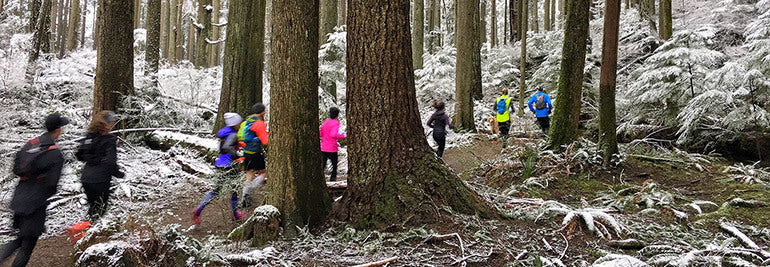

Hollie, Sami and Christoph are the Vertical Week photo contest winners
World Vertical Week was held last week and the hundreds of pictures tagged with #verticalweek on Instagram give a great overall look into what people have been up to during the week. Three of the most inspirational photos were taken by Hollie Holden, Sami Renner and Christoph Oberschneider. Each one of the winners will receive a new Suunto Spartan Ultra to accompany them on their future adventures.
🌲// Legs/entire body felt like an 🐘 at this weeks @vanrunco trail ✈️ crew BUT I managed to hit my @suunto #VerticalWeek goal of 4000m (1k more than my 1st goal! 🙌) of climbing and we were blessed with a pretty layer of 'convenient snow', right @coralie2700 ? 😉🤣❄️
A post shared by Hollie Holden (@holholden) on Mar 5, 2017 at 12:59pm PST
“The Vertical Week was a great opportunity for me to start building my strength and climbing skills ahead of my upcoming training season for my 1st 50 mile Ultra Marathon - the Squamish 50 in August which is a tough, mountainous course with 11,000 feet (3350m) of climbing!
I set myself the goal of covering a similar amount of climbing during Vertical Week so I spent a lot of time on a local trail called the BCMC which starts at the base of Grouse Mountain climbing to the top. This trail has 850m of elevation gain in just 3km of climbing! I ended up doing this trail 4 times in the week (3 times within one 24hr period!) then finished off the week running trails with my local run crew, Vancouver Running Company Flight Crew, surpassing my 3k goal and hit 4000m for the week instead!
The weather in Vancouver has been unseasonably cold, with lots of snow & wet rain and I wouldn't have done anywhere near as much climbing last week if it wasn't for the awesome community of friends that I have here who are willing to come climb mountains in a snow storm with me!”
–Hollie Holden, BC, Canada
Cause she asked so friendly... 🐦 #lovemountains #skimo #verticalweek #collectingmoments #mountaineering #watzmann
A post shared by Sami (@samirenner) on Mar 5, 2017 at 10:10am PST
“The photo was taken on the last of three summits at the “Watzmann-überschreitung”, a famous summer tour in my hometown with over 24km and 2500m of climbing. The goal for me was to do this very technical tour with skis. As I reached the third summit, I shared my last Powerbar with a bird.
A few days earlier during the Vertical Week I was in Zermatt, reaching Breithorn’s (4164m) west and east summits on skis, and on two more skitours. All in all, my Vertical Week was about 7500m of elevation gain over 65km.”
–Sami Renner, Germany
Welcome back, #winter! Yesterday was a great #powderday in @visitgastein. Can't wait for more!
A post shared by Christoph Oberschneider (@coberschneider) on Mar 2, 2017 at 3:09am PST
“I work as a backcountry skiing photographer in Austria, so my goal each winter season is to capture the beauty of backcountry skiing & ski touring, to share my passion for the sport with as many people as possible and ultimately to get more people to enjoy life in the outdoors.
So far we have had a very dry winter here in the Alps, so getting good shots has not been an easy task. So when it finally started snowing 10 days ago, I headed out to Sportgastein (a freeride spot close to Salzburg) with two good friends. We found some beautiful lines in the backcountry with lift-supported ski touring and I managed to get some good shots. And that's how I also spent the rest of the Vertical Week, ski touring in the mountains around Salzburg and trying to capture the beauty of the winter landscape and some more skiing action before the snow starts melting again.”
–Christophe Oberschneider, Austria
Congratulations to our three winners and thank you very much everyone for sharing your Vertical Week moments!
The annual World Vertical Week 2017 is coming!
World Vertical Week will be held globally on February 27 – March 5. You can climb where ever and choose whichever human powered sport you want.
Last year the biggest average ascents per Move were climbed in Switzerland, Austria and France. Ski touring and mountaineering led the highest average ascents for individual sports. Which countries and sports will lead the way this year?
The only thing you need to do to participate is to make sure your country information in your Suunto App settings is correct. After that your ascent will automatically be calculated in your home country’s total figure.
By the end of the week we’ll find out where in the world the real climbers live. Have fun!
#VERTICALWEEK PHOTO CONTEST
Share your Vertical Week experiences on Instagram or Facebook with #VerticalWeek for a chance to win a Suunto Spartan Ultra GPS watch. (Terms and conditions apply. Read them here.)
Read more
How to enjoy the outdoors with your partner: a chat with Emelie Forsberg and Kilian Jornet
Greg Hill's mountain rules
7 tips to accelerating your uphill speed
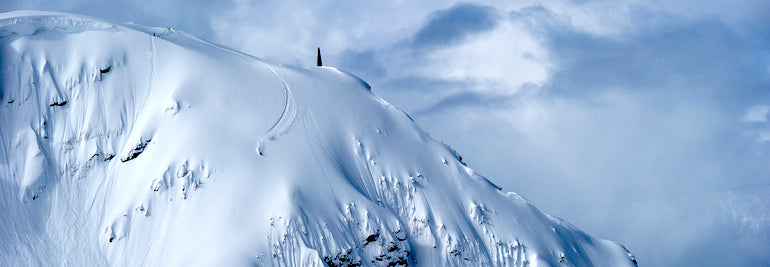

7 Terrain Tricks Greg Hill (literally) can’t live without
Watch Greg Hill’s "7 Terrain Tricks"
This sounds like a lot of thinking to do.
That’s OK – it takes a lot of time to go up. It’s all about developing a loop of thought patterns that you keep going over and over – where’s the next safe spot? What’s above me? What dangers am I exposed to, and where am I going if something happens? – that’s what keeps you safe.
And it’s not about making things tough – sometimes it’s about making them easy.
Yeah – especially the ‘fight the smallest guy at the bar’ trick. You want to go up the safest, easiest terrain, because often, it’s the least exposed to danger. If I’m touring in a new area, I’ll have looked at a map, found the smallest slopes, and used that information while I’m out there.
Greg, who taught YOU the tricks?
Most of these I picked up at the beginning of my skiing career – but mostly, I’ve learned from the mountains themselves. If you watch and listen, you can learn a lot – and that’s at the heart of what many of these tricks are about. Nothing can teach you something like a real-life example. Early on, a mentor taught me to ‘always ski from the top’. Not long after, I found myself on a tour, about to drop into a line, and realized, I wasn’t at the top. So I got back on the ridge, worked my way to the top. The third turn in I sent down a Class III slide that would have almost certainly killed me.
That’s not the only time you’ve seen these tricks work in real life.
Absolutely not. "Seeking the higher ground” – we were on Mt Manaslu in 2012. We camped on the highest ground we could find. That night, an avalanche caught 30 people sleeping in tents. Camps II and II got hit. 12 people died and 30 were caught in their sleeping bags. We were above the slide because we’d picked a spot with no risk from above – just 50m away from where the slide hit.
You want to reduce your time of exposure – but that doesn’t mean you need to rush.
Yes – movement between safe spots should be fast, but don’t make hasty decisions. Move quickly, think calmly. You don’t want to rush decisions.
Is it possible to reduce risk to zero?
Absolutely not. And for me, that’s part of the definition of adventure – it’s an activity that involves risk. That admittedly is part of what makes it exciting and interesting.
Stay tuned for more from Greg Hill in the next instalment of his video series – and ski safe!
Main image: Bruno Long
READ ALSO
Greg Hill's mountain rules
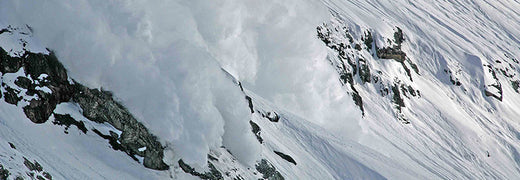

What rules does Greg Hill live by? Watch and see
Watch Greg’s video below to learn the rules and find out why they are important for you too – then scroll down to our interview with Greg to learn more about the life experiences that shaped them.
Greg, let’s start with the obvious: tell use about that avalanche!
May 15th 2014. Deep in the heart of Pakistan, at 5500m, as far from rescue as possible. I only broke my leg, but was very lucky to have lived at all. It was only 30cm high, but it was a few hundred meters across, but the entire feature that I was skiing slid for about 700m vertically.
What did you do wrong?
There was simply nowhere to go – and that was my technical mistake. What I did wrong was skiing a feature with no escape routes or safe spots. I skied like I was able to outrun an avalanche. A small ski cut would have triggered the thing and I would have been on top. But the bigger rule I broke was rule number one – not being afraid enough. I also broke rule number two – the partners I had there weren’t my normal partners. My normal partners would have questioned me more. They didn’t question me enough. Did they learn something from this? I bet they did.
Why did you need to be in that avalanche?
The funny thing is, I had lasted so many years without any issues – I needed that slide to keep my ego in check. There weren’t red flags popping up. We had waited a bunch of days for the snow to settle. The mountains were dormant. But I still broke the rules.
What’s your biggest tip to help you follow the rules?
Keep asking yourself questions. As you’re hiking up. Am i being afraid? Am I well-trained? Do I have the knowledge to back my decisions? Are my partners adding more? Always remember – you don’t know you're making poor decisions, until you experience a consequence.
What can we learn from you next?
This is a lead-in to my terrain tricks video – we’ll discuss concrete, tangible terrain decisions that will help you find ways to wander around the mountains and stay safe.
Stay tuned for more mountain advice from Greg Hill in December!
READ MORE
PREPARE FOR SNOW

Kilian's Everest Dream Lives On
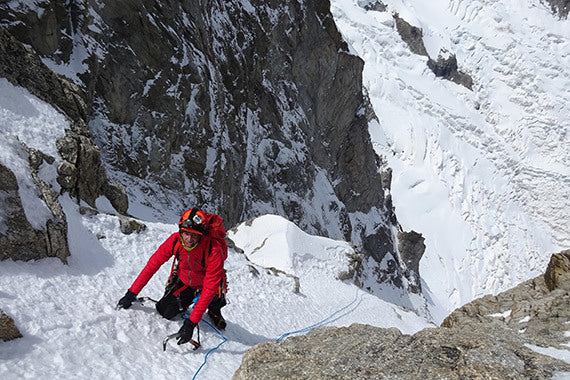
Kilian Jornet is returning from Mt. Everest without having been able to make a final attempt at the summit. Poor weather conditions during the final stage of the expedition forced him to abandon his climb of the world’s highest mountain via it's North Face. Though it was a difficult decision for Kilian and his team, he is as passionate as ever to continue to seek adventure through his Summits of My Life project.
“During the first few weeks we were acclimatising well and the conditions were good. However, when we were getting ready to prepare the attempt the weather began to change. There were some heavy snow storms and a large accumulation of snow. As a result, although we were in good physical shape, there was a high risk of avalanches and in the absence of good safety conditions it was impossible to climb,” Kilian explained.
In spite of not being able to complete the challenge, Jornet was happy with the experience. “There’s a sense of frustration because we’re well acclimatised and we feel good but it would have exposed us to too much risk. Nevertheless, we’re happy because it’s been a very positive experience in which we’ve learnt a lot. Being alone on Everest is incredible as there was no one else there. Now we’ll go home to recover and plan the future. I think that if we come back there are some things we would change but it’s been a great experience and a good lesson for next time.”
So, having spent three weeks at base camp on the North Face of Everest (6,000m) acclimatising and preparing for the challenge of climbing the world’s highest mountain, Jornet and the Summits of My Life team postponed the the Everest challenge until a later date.
With this challenge, Kilian Jornet intended to complete the Summits of My Life project in which since 2012 he has broken records for the ascent and descent of mountains around the world.
READ MORE
KILIAN JORNET’S GAME PLAN FOR SPEED ASCENT OF EVEREST
THIS IS HOW KILIAN PREPARES FOR EVEREST
Main Everest image: © Daniel Prudek/Shutterstock.com


