




Suunto Blog
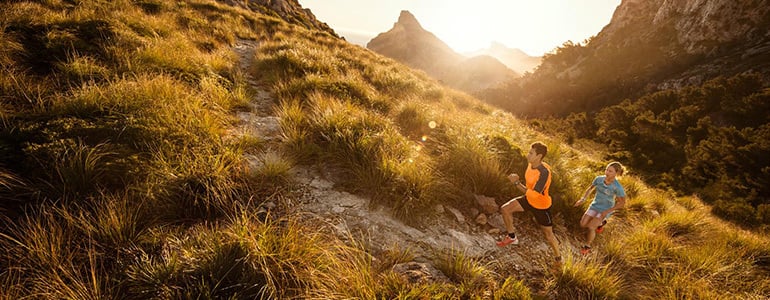

Have your running form analyzed now!
Carmichael Training System coaches Jason Koop and Nick White gave three more runners useful tips to help them improve their running technique.
One week remains for runners to have their technique analyzed for free and to go in the draw to win one of six Suunto Ambit3 Run watches.
Click here to find out how to get involved in the How do I run? contest
As part of the contest, coaches Koop and Nick have so far analyzed clips shared by eight runners, offering ways they can improve their technique or become faster. Read the advice they previously gave to five runners.A good running form comes down to some basic fundamentals and after coaching amateur and elite athletes for most of their lives, Koop and Nick can easily spot ways runners can improve. So, now's the time to improve your running technhique!
Click here to read eight running tips from the coaches
Suunto’s has also released new performance features for Ambit3 watches, including a function that analyzes your heart rate and speed while you run, and two new funcions that help to determine your level of recovery. The new features were developed with Firstbeat Technologies, Suunto’s long term partner in sports sciences. Read more about the new features here.
Feedback from the coaches
#suuntorun how is my running technique?
A video posted by Eden Paz (@tivoninja) on Jul 2, 2015 at 10:19am PDT
Feedback from Nick: Your running technique does look very good! Especially your mid foot strike and stride length. The only thing that I'd recommend working on, is WHERE your feet are contacting the ground. Your initial ground contact is slightly out in front of your hips and center of mass. Ideally you can bring that contact point backwards so that it is directly under your hips you'll really increase your running efficiency. That may FEEL like shortening your stride at first, but ultimately it will be beneficial to your speed!
Hi Suunto, can you please analyze my running style? Thnx ! #suuntorun #suunto #running #hardlopen #hopingtowinthe #ambit3
A video posted by @dlimborgh on Jul 5, 2015 at 9:27am PDT
Feedback from Koop: You have a nice and relaxed upper body and that leads to very good form overall. Your footstrike is slightly in front on your hips, leading to some unnecessary braking forces. If you focus on having this footstrike directly under your hips, this will lead to a more efficient stride.
@suunto #SuuntoRun
A video posted by Steve Skinner (@stephenskinner6) on Jul 7, 2015 at 1:49am PDT
Feedback from Nick: You are running pretty fast here! If you focus on having your head up, directly over your shoulders and staring 10-15 feet in front of you, this will straighten out your torso and upper body.


Dynamic duo crush mountain race records
Suunto ambassadors and couple Kilian Jornet and Emelie Forberg share life training, racing and living in the mountains. Now they share new records at the iconic Alaskan Mount Marathon race.
It’s one of the oldest mountain running races in the world and this year the Mount Marathon Race celebrated it’s 88th race and 100 years since it first began in 1915. Spanish and Swedish runners and couple Kilian Jornet and Emelie Forsberg were there to race and celebrate the historic event. They both won and crushed the men's and women’s records.
“It has been a new experience and I am very satisfied,” Kilian says. “This race is amazing, not only because it’s very technical but also because of the atmosphere surrounding it.”
Click here to find out how to have your running form analyzed by professional coaches for free!
© IrunFar
Kilian and Emelie were both inspired by the iconic stature of the race, it’s famous cheering crowds and the vast Alaskan wilderness. Held every year on US Independence Day (July 4) in Seward Alaska, the 5 km race route starts in the town and ascends 921 m up the steep flanks of Mount Marathon to its 1257 m summit. Runners then make a fast descent back to the town. The mountain is so steep in places runners must climb, scramble on all fours, and contend with a slippery, rocky surface as they make their way up. Both Emelie and Kilian met stiff competition during the ascent of their races. The women’s race was first and Emelie and young Alaskan running phenomenon Allie Ostrander were neck-and-neck until after the half way mark, when Emelie broke away, gaining a 50 second lead by the time she reached the summit. Once she took the lead, Emelie was unchallenged to the finish line, breaking the 25-year-old women’s record by 2m82s.
“I was really not thinking I could do such a good time,” she says. I know I have been training well, but I have also been doing some vertical kilometers and didn’t feel rested enough. So this was super cool."
Click here to read Emelie's trail running tips
Kilian also fought hard with other runners all the way to the summit, but once the descent began his downhill technical skills meant he shot ahead, leaving the competition behind him. He slowed down in the final stretch, giving high fives with fans, spinning for the cameras and still managing to break the previous men’s record by 1m07s.
They are both now preparing for their next races of the season.


Face to Face with Jill Heinerth, #SuuntoAdventure Video Series Episode 7
In this seventh installment of the #SuuntoAdventure Video Series you will meet inspiring underwater explorer Jill Heinerth.
“You can’t always say how to solve a really, really big problem, but you usually know what the next best step is,” the optimistic Canadian says. Read more about Jill here.
Face to Face with Jill Heinerth, #SuuntoAdventure Video Series Episode 7
Watch also the other episodes in the series:
Face to Face with Emelie Forsberg – #SuuntoAdventure Video Series, Episode 1
Face to Face with Greg Hill – #SuuntoAdventure Video Series, Episode 2
Face to Face with Kilian Jornet – #SuuntoAdventure Video Series, Episode 3
Face to Face with William Trubridge – #SuuntoAdventure Video Series, Episode 4
Face to Face with Conrad Stoltz – #SuuntoAdventure Video Series, Episode 5
Face to Face with Ueli Steck – #SuuntoAdventure Video Series, Episode 6


UNDERWATER EXPLORER
“Some people are repelled by the darkness of an underwater cave, but for me it’s an invitation into the unknown,” says Suunto Ambassador Jill Heinerth. Heinerth is a pioneering underwater explorer and filmmaker, leading technical diver, and world expert in rebreather technology.
Her love of the water began as a child and has persisted ever since. As a teen, Jill Heinerth was a volunteer swim instructor and lifeguard at her local swimming pool. Jacques Cousteau was her hero and by the age of 16 she was scuba diving.
Now, after more than a 20-year career, the Canadian underwater explorer and award-winning filmmaker has crossed the globe, diving in what she calls ‘the veins of mother earth’. Jill has dived deeper into the planet than any woman in history and seen some extraordinary places. She’s dived caves underneath the remote Ural mountains of Siberia, tickled the bellies of manatees near the Gulf of Mexico and explored sacred desert springs in Africa. In 2000, she was involved in one of her most ambitious projects to date — to dive inside a giant iceberg. In 2014 she was awarded the inaugural Sir Christopher Ondaatje Medal for Exploration by the Royal Canadian Geographical Society.
Jill is also a journalist and champion for women divers. She wrote a book called Women Underwater and in 2016 is part of a team of 10 women on an epic three-month journey, snorkeling more than 3000 km through frigid Arctic seas. “Some would suggest that exploration on this planet is done, but I disagree,” says Heinerth. “We know more about space than we do about our oceans and our underwater caves.”
Her abiding love of the ocean and watery places has also transformed her into a strong advocate for water conservation and protection, via her We Are Water Project. This important cause aims to raise awareness about global water issues, and encourage people to do more to protect our fresh water resources. Jill cycled across Canada, raising awareness along the way. With the same goal in mind, she wrote a fun children’s book about an itchy manatee that has an important message about water pollution.
Naturally, Suunto is the first choice of dive computer for Heinerth: “I’ve been using Suunto for a long time, and I think they represent the pinnacle of fine quality. The precise instruments and the ruggedness of the equipment have served me very well in some extreme diving expeditions over the years.”
She adds: “The Suunto DX is the key support device that serves as a backup for my rebreather. It’s easy to integrate it into a CCR dive plan, or any plan for that matter – open circuit or closed circuit. It also contains a very accurate digital compass, which I use to survey and make maps of new exploration.”

Become a better runner now!
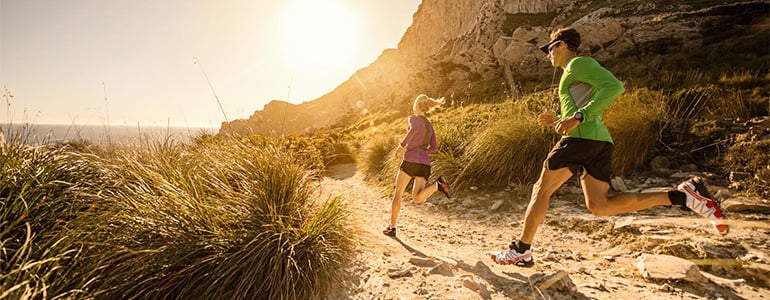
If you would like to improve your running performance, now's the time. Suunto's current How do I run? contest offers you the chance to have your running form analyzed by professional coaches – for free! Whoever shares a clip of themselves running on Instagram and receives an analysis from the coaches goes in a draw to win one of six Suunto Ambit3 Run watches.
So far Carmichael Training Systems coaches Jason Koop and Nick White have analyzed five clips runners have shared on Instagram for the contest. Koop, as he's known in the running world, and Nick offered each runner useful feedback to help him or her make positive changes to their running technique. Watch each of the five clips below and read the feedback given.
Get involved with the How do I run? contest here
To help runners improve their performance, Suunto has also released new features to its Ambit3 watches. The new features were developed in cooperation with Firstbeat Technologies, Suunto’s long term partner in sports sciences, and include running performance level, sleep recovery and quick recovery test functions. Read more about the new features here.
Feedback from the coaches
Click here to read Koop and Nick's 8 general tips to become a better runner
I'm training for my first marathon Salisbury Trail 54321 and would be happy to get some advice about technique @suunto And this video is at our college's field where I usually do speed work #SuuntoRun #running #run
A video posted by Julia A. Russia🇷🇺/Suomi (@asandj) on Jun 30, 2015 at 8:17am PDT
Feedback from Koop: Your overall posture is quite good. You have a slightly forward lean and good head position. Don't change anything there! Your footstrike is slightly forward of your hips. If you focus on your foot striking the ground directly beneath your hips you will be more economical and save some wear and tear on your joints!
#suuntorun
A video posted by Simon Beaulieu (@simonbeaulieu73) on Jul 1, 2015 at 1:30pm PDT
Feedback from Nick: Your body position and footstrike are very good already. Upright body position with a slight forward lean, and your feet are landing midfoot directly beneath your hips. However, your speed would improve with some additional flexibility in your hips, pelvis, and legs. If you are more flexible all around, you'll be able to safely increase your stride length while maintaining your current footstrike. A good stretching or yoga class might be just the thing to get you running faster!
Been spending a lot of time on the track. It's sure paying off on the trails! #speedwork #SuuntoRun #Suunto #runordie #track #trailrunning @suunto
A video posted by Rory Scheffer (@roryscheffer) on Jun 25, 2015 at 10:00am PDT
Feedback from Koop: Looks like some nice speedwork! At these speeds, focus on having a footstrike that is directly under your hips and where your foot is hitting the ground on the midfoot or forefoot. While your flight phase (in air) posture and mechanics are quite good, if you simply focus on changing where and how your foot hits the ground, you will have less stress on your body.
Quick after work run. How is my style looking @suunto? #suuntorun #running #howdoirun
A video posted by Beartastic (@richfrombeartastic) on Jul 2, 2015 at 4:44am PDT
Feedback from Nick: Looks like a great path to put in an after-work run! You would definitely benefit from shortening up your stride slightly, and getting your feet to contact the ground directly beneath your hips. Right now you're landing on your heels just before the rest of your foot, and slightly in front of your center of mass/hips. This results in a "braking" action. Your running will be much more efficient if you can bring that foot strike backwards 6" or so. In the short term that might feel like you're shortening your stride, but in reality you'll just be getting more efficiency out of your effort, and faster overall!
Hey @suunto, analyze my run! #suuntorun #suunto #running #fitness #coaching #technique
A video posted by Josh Gale (@joshagale) on Jul 2, 2015 at 4:37am PDT
Feedback from Koop: Turnover is the key here! Your foot strike and mechanics are very good and I would not change a thing here. However, your running cadence needs to be 10 strides per minute higher. You can correct this by counting the number of strides you take (one foot landing on the ground) for 15 seconds. Multiply by 4 and you should be in the 90 strides per min range. You can also use your Suunto watch to track this metric!

Karl meets Kilian
It’s not everyday that an athlete helps someone break his own records, but then Kilian Jornet is not your regular athlete. He belongs to the spirit of the mountains, where comradeship and camaraderie count more than rivalry and competition.
So when he was contacted by Karl Egloff, a runner who’s broken his speed ascent records on Aconcagua and Kilimanjaro and was looking to meet up, Kilian’s response was, ‘great idea’!
Hit play to see these two mountain athletes meet up for the first time.
© Montaz-Rosset Film “Nothing was set-up,” says the film maker Seb Montaz. “It was really the first time they met. They were both excited to meet and I hope people see them laughing together – there was no rivalry.”
The 34-year-old from Ecuador was in Chamonix with ambitions to break Kilian’s 4h 57m speed record on Mt Blanc. As it happened the attempt was called off as conditions were not ideal but it proved to be a good experience for Karl.
“It was amazing,” he says. “It was really nice to climb with him. We went for a training run and talked, comparing our different experiences. There was no rivalry. He’s so inspiring – just to meet him was an honour.”
Karl and Kilian discuss routes up Mont Blanc. © Sébastien Montaz-Rosset
In February Karl knocked almost an hour off Kilian’s 12h 49m record up and down Aconcagua which he set last December. It follows the record of 6h 42 he set on Kilimanjaro in 2014, beating Kilian’s 7h 14 record from 2010.
But in the unfamiliar ground of Mt Blanc, he says he was happy to learn from Kilian. “He showed me just how fast he is at lower altitudes! My strength is going steeply up to altitude which is why I can make a difference on Aconcagua and Kilimanjaro. Living at altitude helps a lot! But there are no glaciers to cross and Mt Blanc is a very technical mountain.”
“I’ve heard so many stories about Chamonix and it really is an amazing place to be,” he adds.
Karl is returning to Quito, Ecuador for now and has big dreams for 2016. He's hoping to continue with his 7 Summits quest with expeditions to Denali, Elbrus and Antarctica.
© Karl Egloff


