




Suunto Blog
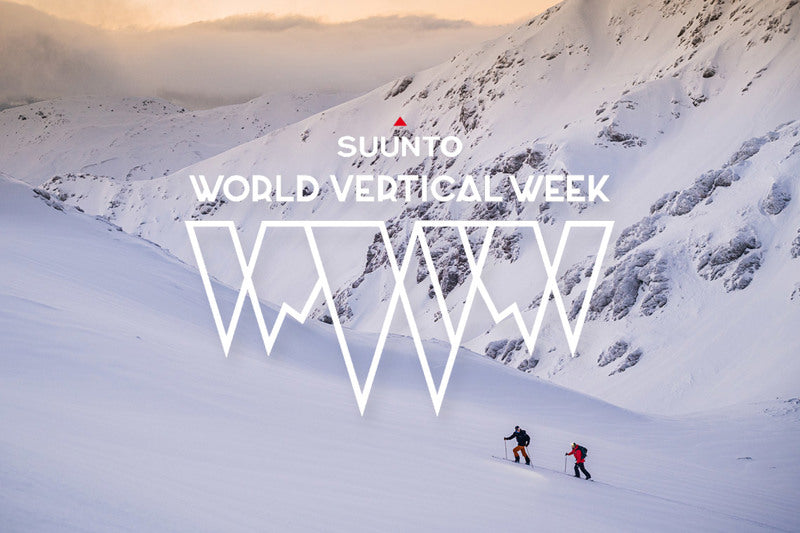

Suunto World Vertical Week 2023 Big Data
Suunto’s annual World Vertical Week has been growing in popularity year after year. Last week, on February 27 – March 5, over 153.000 Suunto users accepted the challenge and set out to gain as many vertical meters as they could. That’s 22% up from last year! Thank you everyone for joining.
During the Vertical Week, every human-powered outdoor activity counted towards the results. In the activity type rankings, there weren’t any major changes: ski touring activities had once again the biggest average ascent, followed by mountaineering and trail running.
Also, the country rankings follow quite a usual pattern: the two top spots for highest average ascents are owned by Austria and Italy – just like last year. In the third position, we have a new nation, Slovakia. Congrats! Portugal and Colombia are new names in the top 10.
Total ascent per country 2023
When looking at the total ascent per country, we can see a new leader: France dethroned Spain and took the top spot. Austria, Italy and Germany round out the top five.
France
Spain
Austria
Italy
Germany
Switzerland
US
Poland
Finland
Japan
Big – and huge – days are more popular than ever
When digging deeper into the data we start to see something interesting: big days out in the mountains and hills are getting more popular. The number of “1000-meter days” has grown by a whopping 75% from last year. During last week’s activation, Suunto community tracked over 12.000 activities that had over 1.000 meters of total ascent.
The same trend continues with activities that had over 2.000 meters of ascent: that number increased by 76% to over 2.000 activities. The number of really, really big days – days that had more than 3.500 meters of ascent – doubled from last year!
This same trend is visible also when looking at the data from another perspective: 176 participants collected more than 10.000 meters of total ascent during the week. That is twice as much as last year. Impressive!
As the days get bigger, the activity types change slightly: The biggest portion, 40%, of 1000-meter days was ski touring while trail running covered 25% of the activities. In the 2000-meter days ski touring and trail running was almost equal at 32% and 30% respectively. A surprise comes with the 3500-meter – or “10000-foot” – days: there suddenly running has the biggest share with 28% of the activities followed by ski touring (22%) and trail running (21%). Some runners have really pushed it last week!
Country rankings for different activities
Ski touring (avg for all countries 929m)
Switzerland 1.033m
Austria 1.005m
Italy 994m
Spain 940m
Germany 936m
The 1000-meter mark is a clear goal for skiers. Switzerland is in the top spot – just like last year.
Mountaineering (avg for all countries 676m)
Czech Republic 788m
Switzerland 760m
Germany 755m
Japan 717m
Poland 699m
Mountaineering has a new winner: The Czech Republic climbed to the top spot for the first time!
Trail running (avg for all countries 421m)
Japan 852m
Portugal 707m
Italy 620m
South Korea 536m
Spain 528m
Switzerland 508m
Austria 443m
Slovakia 413m
Slovenia 391m
Thailand 382m
Japanese trail runners crushed it again! Also, other Asian nations, like South Korea and Thailand proved that uphill is the way to run in that corner of the world.
Mountain biking (avg for all countries 387m)
Italy 516m
Spain 515m
Portugal 453m
Switzerland 446m
United Kingdom 386 m
In mountain biking, Italy rose from the second spot last year to number one this time. Forza!
Hiking (avg for all countries 221m)
Italy 441m
Slovakia 426m
South Korea 373m
Thailand 349m
Japan 337m
Another crown for Italy – and another activity ranking where Asian countries are strong.
Cycling (avg for all countries 182m)
Spain 417m
Portugal 394m
Italy 369m
Slovenia 306m
South Africa 248m
Spain, the top destination for winter cycling in Europe, was not a surprise leader in the cycling ranking. A welcome addition to the list was South Africa, nicely adding yet another continent to the top lists. Along with several European countries we had nations from Asia, Africa, South and North America amongst the top performers. Awesome!
Nordic skiing (avg for all countries 180m)
Japan 418m
Slovakia 411m
Spain 377m
Czech Republic 357m
Poland 335m
This list looks quite different from last year! Japan takes its second top spot in a slightly surprising category to complement its win in the trail running category. The usual suspects for Nordic skiing, Norway (277m), Sweden (209m) and Finland (125m), did not reach the top of the rankings this time.
Running (avg for all countries 100m)
Switzerland 157m
Slovenia 137m
Portugal 131m
Czech Republic 127m
Norway 125m
Running, the most popular activity overall, is not the king of Vertical Week: its average ascent is the smallest, exactly 100 meters. However, in the leading nation, Switzerland, the average ascent for running was over 50% more than that.
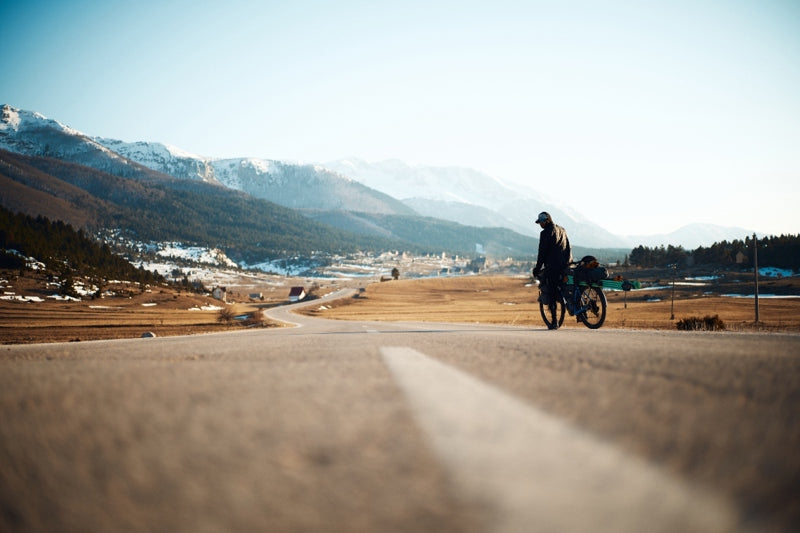

Watch the Balkan Express adventure film
All we need sometimes is one special moment to make hardship worthwhile. When long-time adventure buddies Max Kroneck and Jochen Mesle gazed out across Valbona valley in Albania, blanketed in virgin POW, and with it all to themselves, it made the trials of their Balkan Express adventure project worthwhile.
Cycling in temperatures that dropped to -15c, flats, a minor crash, intimidating street dogs, exhaustion, and the kindness of strangers - they experienced all this and more while cycling from the coastal city Thessaloniki in northern Greece through the Balkan region to Munich, Germany during late winter 2022. All up, they cycled 2500 km and skied seven spots in seven countries
Their minds were blown by the mountains and slopes they discovered along the way. Their minds were even more blown by the fact they had them all to themselves. It turns out, freeriding hasn’t really caught on throughout the Balkan nations. Neither have bike lanes. They met some inspiring locals who enriched their journey. And that was the point; it was an adventure as much about connecting with the local cultures as it was about cycling and freeriding.
We caught up with Max and Jochen and asked about their experience. Read on below and click here to find out where you can watch the adventure documentary that’s been picked up by the BANFF Mountain Film and Book Festival.
Watch the full film below!
How and why did you come up with the idea for the project?
Max: We really wanted to experience some mountains, cultures, people we didn't know. We looked at a map of Europe and saw that the Balkans are pretty interesting. We’d never been there and wanted to learn about the people living in the mountains there. The sport side wasn’t the main focus of the project. It was about getting to know the culture and people.
How did you connect to local people?
Jochen: Before we left, we tried to get in contact with local mountain guides and local artists. We connected with four people and met them along the way. And of course we met a lot of people on the road. Those people gave us a good insight into life there.
What was your route?
Max: We started in Thessaloniki. We went skiing at Mount Olympus in Greece, then we cycled through Macedonia, Albania, Kosovo, Montenegro, Bosnia and Herzgovina, Croatia, Slovenia, Austria and back to Germany.
How did your Suunto watches help you?
Jochen: In combination with Komoot it was so good to be able to plan and also be spontaneous along the way. We didn’t need to think about navigation. We spent some time in the morning planning and then just followed our watches. We didn’t get lost once! It was cold in the beginning and it was interesting to see the temperature on our watches. I’m a statistics nerd so I I enjoyed getting all the numbers. We also used the heatmaps in Suunto app sometimes, especially in Albania and Greece where there are more mountaineers, and it seems like they use Suunto too! So we could use the heatmap to hike up.
What was something that surprised you as you traveled through?
Max: We met a mountain guide in Kosovo, Uta, who is trying to make mountaineering more popular in Kosovo especially amongst women, since there are so few. She also talked about their home mountains; they are so beautiful, yet very few of the locals use them. They’re mostly empty. It’s crazy this region is so close to ours, but almost nobody there is into mountaineering. We were pretty much always alone. We met some Italian ski mountaineers in Kosovo once. Then we saw them again later in Albania. But that’s it. Most western Europeans don’t know about all the incredible spots.
Also surprising was learning that it was not so long ago that the first freeriding equipment became available there. A mountain guide from Kosovo told us he could only buy freeriding skis and touring bindings there 10 years ago. The market is just not there. These sports haven’t taken root in the culture. Maybe amongst the richer people.
We also didn’t see any cyclists along the way or cycling tracks. Cars play a big role in the Balkan countries.
Did you find many beautiful ski runs you'd like to go back and ride again?
Max: For sure. We had seven days of skiing in seven different countries, starting with Greece. It was a bummer that we had to keep moving forward and weren’t able to spend more time in each place, especially in the countries further south. We saw beautiful mountains in Montenegro, but we couldn’t go skiing there. We really want to go back. But at the same time, it was also nice to keep moving forward. We had really good snow conditions in the southern countries, but the further north we went, when we expected better conditions, it actually got worse.
You guys are backcountry skiers and mountaineers - do you have a background in cycling, too?
Jochen: Max and I met at local ski parks. We both made our way to the backcountry and went to freeriding comps together. A few years later I invited Max to a film project — that’s how we got to know one another better.
Back in 2018 we did a similar project and made a film about it: Ice and Palms. We started from our doorstep in Germany and cycled to the Mediterranean and skied the mountains we know and love along the way. That’s when we started to enjoy riding bikes.
Where can people see Balkan Express?
Jochen: There’re lots of screenings coming up, and we’ll be doing live talks, presenting our book about the project. Then, in the middle of winter, people will be able to watch the film online. It’s so cool to see such a wide range of people are getting inspired by it.
Images by @maxkroneck / @jochen_mesle / @elflamingofilms

Join Suunto World Vertical Week 2023 and reach new heights!
Together, we can inspire and motivate each other to climb higher and reach new heights. So let's lace up our boots, grab our Suunto watch, and get ready to conquer the vertical world! Run, ride, ski, walk, climb – all human-powered activities between February 27 and March 5 count.
#verticalweek is also an opportunity for nations to go head to head to see who climbs the most. Since 2016 nations have battled for the top spot, as well as sports, to see who can accumulate the most vertical meters.
To participate in Suunto World Vertical Week, open Suunto app and click the Vertical Week card in your inbox (the bell symbol on the top of your screen takes you there).
Share your #verticalweek experience and win!
Run, hike, walk, ski or ride a quad-busting route and then share the workout from Suunto app as an image with the data overlay in Instagram, tagging @suunto and #verticalweek, and we’ll select three of the most inspiring shares and those users will win a Suunto 9 Peak Pro GPS watch.
Click here to learn how to share your activities with Suunto app.
Terms and conditions apply. Check them here.
Data from the previous years
Check out which sports and nations have captured the podium places during the past years. Will this year bring changes to the top places? Now is your chance to affect on this year's results by collecting as many vertical meters as possible.
2022 - Summer 2021 - Winter 2021 - 2020 - 2019 - 2018 - 2017 - 2016
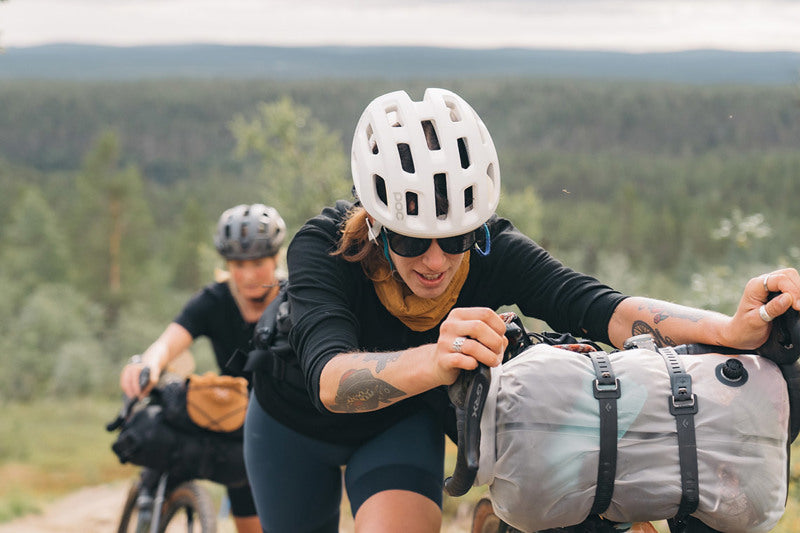

Five adventure films to watch
Lost then found
When you lose a part of yourself you begin to question why you were holding onto it so much, to begin with, in a life where change is the only constant, how do we let go and focus on the things that bring us joy?
Lost then found is the introductory episode of Suunto ambassador Christian Meier’s year-long project exploring the transition from a professional cyclist to an ultra trail runner.
”This project is about stepping back to gain a better perspective on life’s highs, lows, and challenges, which make it beautifully complex,” says Christian.
Caught in an avalanche. Is freeriding worth the risk?
Suunto ambassador Antti Autti has just started his 20th season as a professional snowboarder and kicks it off with a new Arctic Lines episode called “Twenty”. Twenty is actually split in chapters one and two so there’s plenty to watch!
“I’m not going to say I want to celebrate the anniversary but I want to have a season where I am really going for it!” Antti says.
In Twenty Chapter 2, Antti gets in trouble and is taken down by an avalanche. He is forced to think hard about his approach to risk-taking while exploring.
”No matter what we do, accidents can happen. And when that happens, our greatest responsibility is to share the experiences honestly, even if it’s painful. That way, others can learn from our mistakes and make better decisions in the backcountry.”
Bikepacking the Arctic Post Road
Adventure buddies and Suunto ambassadors Sami Sauri and Henna Palosaari went on a bikepacking trip way up above the Artic Circle over summer. Wild, vast open spaces, reindeer, kindly locals - they had a blast.
“Experiencing the simplicity of life up north and the local culture combined with the tranquility of the long wilderness sections creates a bikepacking experience that takes you miles away from the city hustle,” says Henna about the 430 km trip from Ylläs in Finnish Lapland to Alta, on the fjords at the top of Norway.
Read more about the Arctic Post Road
Turn it all off and come back to the present moment
"Present" follows Suunto ambassador Freya Orban and her friend and photographer Lukas Dürnegger as they go on a fast packing hut to hut trip in the mountains of Jämtland in central Sweden to rediscovering presence and the joy of running. Freya and Lukas left their smartphones at home and really tuned into the living world around them. Along the way they took time to stop a lot – and ate handfuls of juicy blueberries and cloudberries.
Read Freya’s 3 tips to find presence
So far… we have made it this far
Was this MTB adventure actually a MTB adventure? Sure, they had their mountain bikes with them. But with terrain so tough it’s hard to even hike it, what to speak of riding it, the question of what to call this madcap adventure arises.
The ragtag group of riding buddies consisting of Kevin Landry, JF Newton, Margus Riga, Kenny Smith, andPeter Wojnar set off on a freeriding adventure deep into British Columbia’s wild and rugged Chilcotin mountain range in search of new freeride lines.
The word expedition suits it better than adventure and 'challenge' doesn’t really do it justice. Watch the video above and read the report from the film crew and maybe you’ll reach a satisfying way to define it.


5 popular blog articles and 5 must-read tutorials of 2022
How to mix it up when you love too many outdoor sports
Allround mountain sport athlete Anton Krupicka shares how he strikes a balance with the four sports he loves.
”Embracing a variety of mountain sports has made me a more well-rounded athlete. It’s also extended my running career - there’s no way that I could only run now and stay healthy enough to race and have it be sustainable. That’s the main benefit,” Anton says.
Read more
Who’s having the most fun?
Feeling is an excellent metric for recovery. If your feelings after exercise start to trend downwards, something is not right. You may be pushing too hard, not recovering well enough or might be getting sick. Consider taking a break or doing something different for a change.
But in addition to helping you track your recovery, feeling data reveals more. Here are six interesting findings about Suunto community, based on the data from Suunto app database.
Read more
5 reasons why endurance athletes should do high-intensity strength training
To improve vertical speed and endurance, high-intensity resistance training should be an essential component of your training plan, says sports scientist, coach and athlete Susi Kraft. She is concerned many endurance athletes, whether trail runners, mountaineers or cyclists, believe they can skip the gym altogether or just do a little bodyweight training and that will suffice.
“One of the most common myths in the endurance world is that athletes should avoid lifting heavy weights, as they don’t need that for endurance, or that it will cause them weight gain and may slow them down,” Susi says. “This is just a myth. Actually, HIRT will make you faster, stronger and less prone to injury.”
Read more
Allyship in the outdoors: what is it and how to be a good ally for others?
Strong allies make for safer, more welcoming outdoor spaces. In this article by Suunto athlete, ultra-runner and diversity champion Ryan Montgomery, he explains allyship and how we can all be good allies in the outdoors.
“Not everyone feels welcome, nor safe, in the outdoors. Diverse communities – our queer, LGBT, people of color, and peers with disabilities – often experience limitations that prevent them from getting outdoors. Each of us plays a role in eliminating barriers to outdoor spaces for others; being an ally is what will make outdoor recreation safe and accessible for all people,” writes Ryan.
Read more
15 tips for beginners to fall in love with snorkeling
Dipping beneath the surface of the ocean opens up an incredible new world. It can expand our minds and bring us closer to our blue planet. With snorkeling, there’s no need for dive training or to carry heavy dive equipment. All you need is a good mask and snorkel, fins, a rash guard, reef-safe sunscreen, basic knowledge, and the new Suunto 9 Peak Pro so you can use the “snorkeling mode”.
Read more
And there’s always something to learn!
In addition to inspiring and insightful stories, several how to articles were frequently read. Check these out, for example.
Living peak adventure – How to navigate with Suunto
With a GPS watch from Suunto, a world of adventure is at your fingertips. Learn how to find, create and navigate routes that’ll keep you stoked. Read the five-part article series
How to use Karoo 2 bike computer with Suunto
Hammerhead Karoo 2 is a Suunto compatible cycling computer that brings advanced navigation features, Suunto heatmaps and intuitive software to your handlebars. But there’s more to it than that! Read more
Suunto app goes big
On a big screen device like an iPad or an Android tablet you can experience richer texture and detail while planning routes and analyzing your training data. Learn more
Track your human powered commutes with Suunto
Living a more sustainable life starts with small, everyday choices. And, when done often enough and by enough people, these small changes will add up and start to have an impact. To support you in this, we have added the ability to track your human-powered commutes with Suunto app. Learn more
Plan your interval workouts with Suunto app
Build a workout in Suunto app and let your watch guide you through your session! This is especially useful with complex sessions, like intervals. Use Suunto app to build the workout step by step from warm-up to cool-down. Learn more


Control your core body temperature and get better performance results
Your core body temperature can massively impact your performance. That’s why athletes pour water over themselves during races. They’re trying to cool down because they know once their core body temperature reaches a certain level, they’ll lose power and their performance will deteriorate. Like heart rate and power, core body temperature is a crucial metric for elite and recreational athletes alike.
A new partnership with Suunto and CORE gives the Suunto community the opportunity to gain heat awareness and improve performance. The Suunto 9 Peak Pro, the most powerful watch we’ve ever made, combined with the CORE sensor mean the three key metrics of training and performance - heart rate, power, core body temperature - are all displayed on your watch face.
Read on to learn more and for three ways to control your core body temperature.
Overcoming the data and knowledge gap
Performance manager at CORE and road cyclist Christopher Jones believes a general awareness and understanding of core body temperature and how it affects performance is limited.
Until recently, athletes could only use invasive technology - e-pills and rectal probes - to monitor core temperature, and only for short time windows. Whereas heart rate monitors have provided almost around the clock data for decades. As a result the general public don't know a lot about core body temperature and how increased temperatures impact performance.
But the CORE sensor changes that. “The big advantage an athlete gets from CORE is understanding their body and being able to perform better in the heat,” Christopher says. “It is an easy-to-use and affordable solution that opens up this data and heat awareness for everyone.”
Embrace the tech and train smart
Christopher is excited CORE has now partnered with Suunto. The body temperature sensor has been used by athletes, coaches and sports scientists for several years. Just as heart rate monitors eventually began enjoying popularity with recreational sports enthusiasts, the same thing is gradually happening with core body temperature.
“It’s a new technology,” he says. “So just like a heart rate monitor, or a power meter, it will take time for people to adapt. But if you’re not racing in the Tour De France, you still use a heart rate monitor, right? Same thing with CORE. The tech will help guide sports people so they can train and race at their best. In a hot weather environment where it’s even harder to stay cool, the real time core body temperature data helps people to take the right steps to avoid heat becoming a problem.”
How does core body temperature affect performance?
When you get hot, your power output drops. Thermoregulation is, however, individual. Some people are better at operating at higher temperatures than others. When athletes get hot, the body diverts blood away from power-producing muscles to the skin. Sweat evaporation then cools the blood and the core body temperature.
3 ways to keep your core body temperature down
The CORE sensor delivers live data directly to your Suunto watch and means you are informed and can take action before it is too late. There are a few specific approaches to help manage your core body temperature for performance.
Follow a heat strategy
This involves doing things like easing off before you know you will begin a long ascent so you can cool your body down in advance. Or another example is staying behind other riders to reduce the amount of power needed and to keep your core body temperature as low as possible until you see a better opportunity to push.
Do active cooling
Staying well hydrated, pouring cold water over yourself, and wearing highly breathable fabrics and gear are all tactics that can be combined to keep cool.
Train your body to perform better when it’s hot
Heat training involves conditioning your body to be more efficient and perform better when you’re hot. CORE helps you elevate your core temperature to a precise temperature zone, letting your body adapt without wearing yourself out.
“Some athletes do heat training as a two-week training block, and then after that they can keep the conditioning with maintenance sessions.,” Christopher from CORE says. “Another approach is to slowly integrate heat training sessions into regular training sessions.”
How to use CORE body temperature sensor with your Suunto
SuuntoPlus CORE sports app is compatible with all Suunto 9 and Suunto 5 watches. To get started with CORE temperature sensor go to SuuntoPlus Store in Suunto app, find SuuntoPlus Core and select "Add to watch".
Before starting your activity, go down to exercise options and select CORE sports app. This connects your watch with the CORE sensor.
During your workout, your watch will receive and display live data from CORE sensor. Your body temperature data during the activity will also be saved in your workout.
Note: Make sure your Suunto 9 or Suunto 5 watch is updated to the latest software.
Learn more about CORE body temperature


